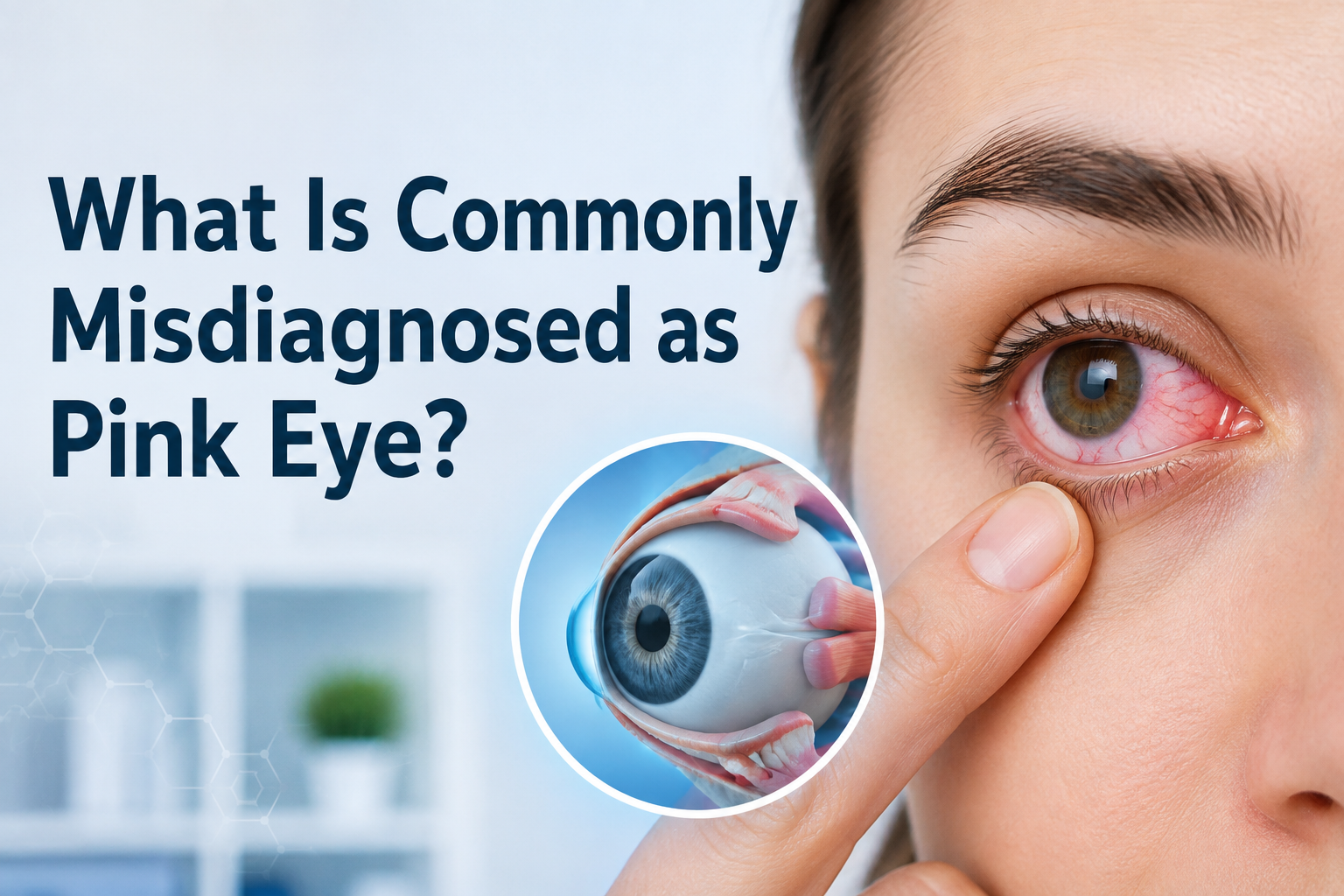
Eye redness is one of the most common reasons people seek medical advice, yet it is also one of the most frequently misdiagnosed symptoms.
Many patients and even some healthcare providers label any red, irritated eye as “pink eye” without checking for the specific signs that separate conjunctivitis from other conditions. This happens because several eye problems share overlapping symptoms such as redness, tearing, and mild discomfort.
Understanding what is commonly misdiagnosed as pink eye helps patients seek the right treatment faster and avoid complications that come from treating the wrong condition.
Understanding Pink Eye (Conjunctivitis) First
Before exploring the conditions that get mistaken for it, it helps to understand what true conjunctivitis actually involves. Pink eye is an inflammation of the thin membrane covering the white part of the eye and inner eyelid, usually caused by a virus, bacteria, or allergen.
What Conjunctivitis Actually Looks Like
Conjunctivitis typically presents with diffuse redness across the white of the eye, along with a watery or thick discharge depending on the cause. Viral cases often start in one eye and spread to the other within a few days. Bacterial conjunctivitis usually produces a yellow-green discharge that causes eyelids to stick together after sleep.
Why Misdiagnosis Happens So Often
Many eye conditions share the basic symptom of redness, which makes them look similar at first glance without a closer eye exam. Healthcare providers working with limited time or through phone consultations may default to a pink eye diagnosis simply because it is the most familiar explanation for red eyes.
Blepharitis — The Most Common Look-Alike
Blepharitis is inflammation of the eyelid margins, and it is one of the conditions most frequently mistaken for pink eye due to overlapping redness and irritation. Unlike conjunctivitis, blepharitis centers on the eyelid itself rather than the eye’s surface.
Symptoms That Overlap With Pink Eye
Both conditions cause redness, itching, and a gritty sensation that makes patients assume they have the same illness. Blepharitis also causes crusting along the eyelashes, especially noticeable after waking up, which can resemble the discharge seen in bacterial conjunctivitis.
Key Differences
The table below breaks down how blepharitis differs from true conjunctivitis so patients can identify which condition they may actually be dealing with.
| Feature | Blepharitis | Conjunctivitis |
| Location of redness | Eyelid margins | White of the eye |
| Onset | Gradual, chronic | Often sudden |
| Discharge | Flaky, oily crusting | Watery or purulent |
| Contagious | No | Often yes (viral/bacterial) |
| Common trigger | Clogged oil glands, skin conditions | Virus, bacteria, allergens |
Dry Eye Syndrome Mistaken for Conjunctivitis
Dry eye syndrome is another condition frequently confused with pink eye because both produce redness and a persistent feeling of irritation. However, dry eye stems from a lack of proper tear film rather than infection or inflammation from an external source.
Shared Symptoms
Both conditions cause burning, redness, and a gritty or sandy feeling that makes patients rub their eyes throughout the day. Dry eye can also cause mild tearing as the eyes try to compensate for the lack of lubrication, which further muddies the diagnosis.
How to Tell Them Apart
Dry eye symptoms tend to worsen throughout the day and improve with lubricating drops, while pink eye symptoms remain steady or worsen regardless of eye drops used. Dry eye also lacks the sticky discharge typically seen with bacterial or viral conjunctivitis.
Allergic Conjunctivitis vs. Infectious Pink Eye
Allergic conjunctivitis is technically a form of conjunctivitis, but it is frequently mistaken for the infectious type, leading to unnecessary antibiotic prescriptions. The distinction matters because allergy-related redness responds to antihistamines rather than antibiotics.
Itching, Timing, and Seasonal Patterns
Allergic conjunctivitis usually affects both eyes simultaneously and is strongly linked to seasonal triggers like pollen or persistent triggers like pet dander. Intense itching is the hallmark symptom, whereas infectious conjunctivitis tends to cause more burning than itching.
Discharge Differences
Allergic reactions typically produce a clear, watery discharge, while bacterial infections cause thicker, colored discharge that can crust over the eyelashes. This distinction alone helps many patients and providers narrow down the correct diagnosis before starting treatment.
Corneal Abrasion or Foreign Body
A scratched cornea or a trapped foreign object can cause redness and tearing that closely resembles pink eye, but this condition involves physical damage to the eye’s surface rather than infection. Missing this diagnosis can lead to prolonged pain and risk of corneal scarring.
Sudden Pain, Light Sensitivity, Tearing
Corneal abrasions cause a sharp, sudden pain that is far more intense than the mild discomfort typical of conjunctivitis. Sensitivity to light and a strong urge to keep the eye closed are also common signs that point toward a scratch rather than an infection.
Why This Needs Urgent Care
This condition requires prompt evaluation because an untreated scratch on the cornea can lead to infection or scarring that affects vision permanently. Home remedies meant for pink eye will not resolve the underlying damage and may worsen irritation.
Uveitis and Iritis — The Serious Misdiagnosis
Uveitis and iritis involve inflammation of the deeper structures inside the eye, and mistaking them for pink eye can lead to delayed treatment with serious consequences. These conditions are far less common but far more dangerous if overlooked.
Red Flag Symptoms
Deep, aching eye pain combined with blurred vision and extreme sensitivity to light should never be dismissed as simple pink eye. Unlike conjunctivitis, uveitis often affects only one eye and causes noticeably reduced vision that worsens without treatment.
Why Delayed Diagnosis Is Dangerous
Untreated uveitis can lead to complications such as glaucoma, cataracts, or permanent vision loss if inflammation is not controlled quickly. Because these symptoms overlap with conjunctivitis, patients sometimes wait too long before seeking specialized eye care.
Subconjunctival Hemorrhage
A subconjunctival hemorrhage occurs when a small blood vessel bursts beneath the eye’s surface, creating a bright red patch that can look alarming but is not related to infection. Despite its dramatic appearance, this condition is usually harmless and painless.
Painless Redness Without Infection
Unlike pink eye, this condition causes no discharge, no itching, and no real discomfort beyond mild awareness of the redness. The affected area often appears as a solid red patch rather than the more diffuse redness seen in conjunctivitis.
When It Resolves on Its Own
Most subconjunctival hemorrhages clear up within one to two weeks without any treatment as the body naturally reabsorbs the blood. Applying pink eye treatments in this case is unnecessary and does nothing to speed up recovery.
Episcleritis and Scleritis
Episcleritis and scleritis involve inflammation of the tissue beneath the conjunctiva, and both are commonly confused with pink eye due to visible redness in similar areas of the eye. However, these conditions vary greatly in severity and required treatment.
Localized vs. Diffuse Redness
Episcleritis usually causes a localized red patch in one area of the eye, while scleritis involves deeper, more widespread redness that often has a bluish or violet tint. Pink eye, in contrast, tends to spread redness more evenly across the entire white of the eye.
Pain Level as a Differentiator
Episcleritis is usually mild and self-limiting, but scleritis causes intense, boring pain that can radiate to the surrounding face and worsen with eye movement. This level of pain is a major clue that rules out simple conjunctivitis.
Contact Lens–Related Complications
Contact lens wearers face a higher risk of eye problems that are frequently mistaken for pink eye, sometimes leading to continued lens use that makes the condition worse.
Giant Papillary Conjunctivitis
This condition develops from prolonged contact lens wear and causes bumps under the eyelid along with redness and discomfort similar to conjunctivitis. It typically improves once lens use is stopped or switched to a different type or cleaning routine.
Microbial Keratitis Risk
Bacterial or fungal infections of the cornea, often linked to poor lens hygiene, can mimic pink eye but progress far more aggressively and threaten vision if untreated. This condition requires immediate medical evaluation rather than standard conjunctivitis treatment.
Comparison Table — Symptom Breakdown
| Condition | Redness Type | Discharge | Pain Level | Vision Change | Urgency |
| Blepharitis | Eyelid margin | Crusty, oily | Mild | No | Low |
| Dry Eye | Diffuse, mild | Minimal watery | Mild burning | No | Low |
| Allergic Conjunctivitis | Both eyes | Clear, watery | Itching only | No | Low |
| Corneal Abrasion | Localized | Watery | Severe, sudden | Possible | High |
| Uveitis/Iritis | One eye | None | Deep aching | Yes, blurred | Urgent |
| Subconjunctival Hemorrhage | Solid patch | None | None | No | Low |
| Scleritis | Deep, bluish | None | Severe | Possible | Urgent |
| GPC (Contact Lens) | Diffuse | Mild mucus | Mild-moderate | No | Moderate |
When to See a Doctor Immediately
Certain warning signs indicate that a red eye is not a simple pink eye and needs prompt medical attention rather than home care.
Sudden vision changes, severe pain, light sensitivity, or symptoms confined to one eye without improvement are all reasons to seek same-day evaluation from an eye care professional.
Frequently Asked Questions
Is blepharitis the same as pink eye?
No, blepharitis affects the eyelid margins and is caused by clogged glands or skin conditions, not infection.
Can allergies really look like pink eye?
Yes, allergic conjunctivitis shares redness and watering with infectious pink eye but is driven by allergens, not viruses or bacteria.
When should a red eye be treated as an emergency?
Sudden vision loss, severe pain, or one-sided symptoms with light sensitivity should be treated as urgent, not as pink eye.
Does a subconjunctival hemorrhage need treatment?
No, it typically resolves on its own within one to two weeks without any medication.
Can contact lenses cause pink eye–like symptoms?
Yes, both giant papillary conjunctivitis and microbial keratitis can mimic pink eye in contact lens wearers.
Conclusion
Many conditions closely resemble pink eye, but each has distinct causes and treatment needs that differ from standard conjunctivitis care.
Paying attention to pain level, discharge type, and whether one or both eyes are affected helps identify the real underlying issue faster.
RELATED POSTS
How to Get Rid of Neck Hump: Causes, Exercises & Treatment Guide
Does Constipation Cause Fever? What You Need to Know
How to Sleep With a Stuffy Nose: Complete Guide to Breathing Easy at Night
LifeX Health Insurance Explained: Plans, Coverage, Cost, Benefits and Full Detailed Guide