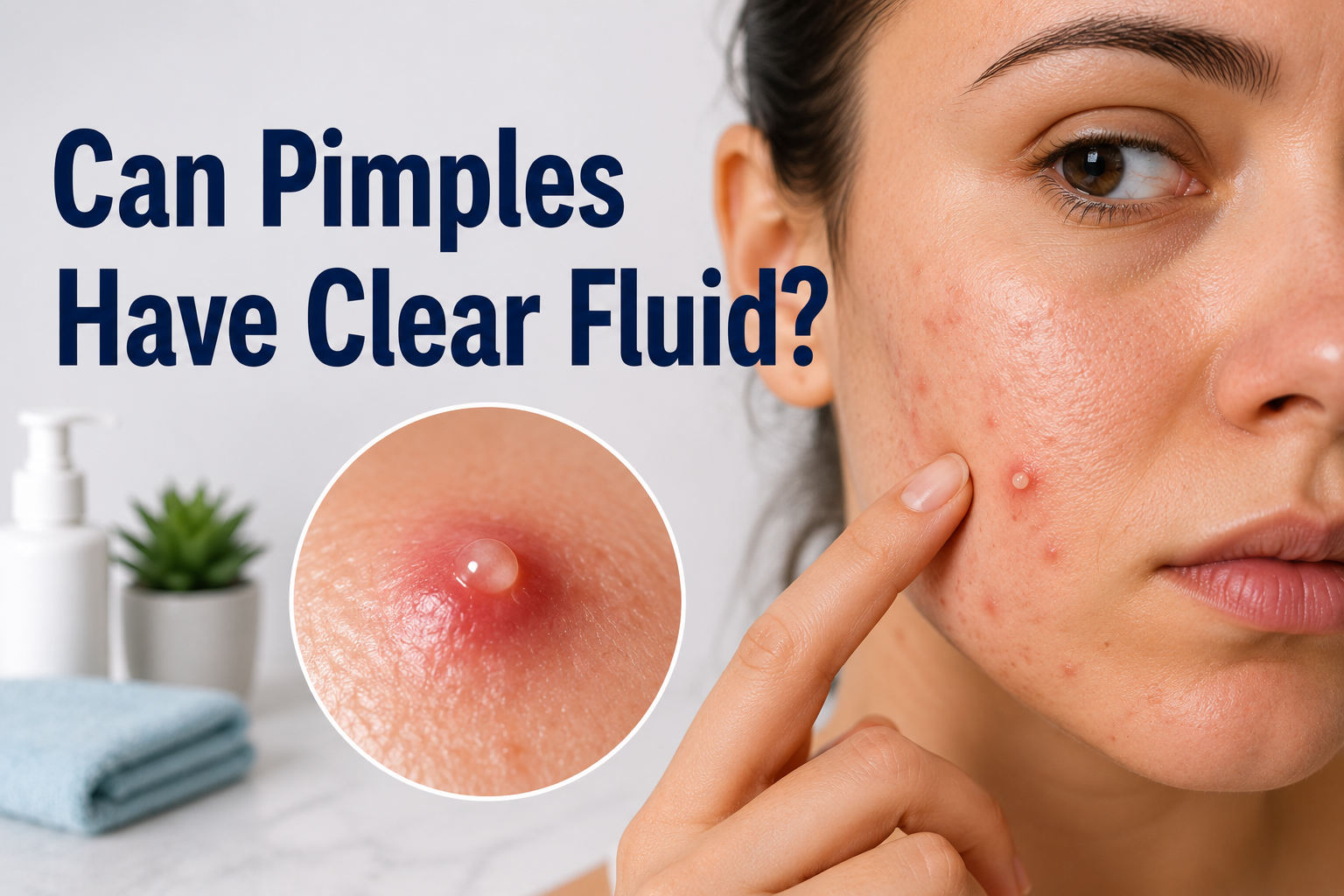
Yes, pimples can have clear fluid, and in most cases this is completely normal. Clear fluid usually appears in the early stage of a pimple, before pus has fully formed, or after a pimple has been popped or irritated.
This fluid is often just serum, a watery substance released by the skin as part of its natural healing response. It is different from pus, which is thicker and usually a sign of bacterial infection. Understanding the difference helps you know whether your skin is simply healing or needs extra care.
Understanding Pimples: A Quick Basics Refresher
Pimples form when oil, dead skin cells, and bacteria build up inside a pore and block it. Once blocked, the pore becomes inflamed, and the skin reacts in different ways depending on how deep and how irritated the clog becomes. Below, the different stages and types of pimples are explained in detail.
What Causes Pimples
Pimples develop when the sebaceous glands under the skin produce excess oil, which mixes with dead skin cells and gets trapped inside a pore. Bacteria naturally present on the skin then multiply inside this blocked pore, triggering inflammation. Hormonal changes, sweat, humidity, and certain skincare products can make this process worse.
Stages of a Pimple’s Life Cycle
A pimple usually starts as a small, slightly raised bump with no visible fluid. As inflammation increases, fluid or pus begins to collect underneath the skin’s surface. Eventually, the pimple either drains on its own, gets absorbed by the body, or is popped, after which the healing stage begins.
Types of Pimples
Not all pimples look or behave the same way, and the type often determines whether clear fluid, pus, or no fluid at all will be present.
| Type of Pimple | Appearance | Fluid Content |
| Whitehead | Small white bump, closed pore | Often clear or slightly cloudy fluid |
| Blackhead | Open pore with dark tip | Usually no fluid, just trapped debris |
| Papule | Small red, firm bump | Little to no fluid |
| Pustule | Red bump with visible white/yellow tip | Pus, sometimes clear fluid around it |
| Nodule | Large, hard, painful bump | Usually no surface fluid |
| Cyst | Large, soft, deep bump | Thick fluid or pus |
What Does Clear Fluid in a Pimple Mean?
Clear fluid in a pimple usually means the skin is either in an early inflammatory stage or actively healing after irritation. It is generally a sign that the body is responding normally rather than a cause for alarm.
Serum vs. Pus
Serum is a thin, watery, and often yellowish-clear fluid that leaks from the skin when it is irritated, injured, or healing. Pus, on the other hand, is thicker, cloudier, and usually white or yellow, forming as a result of the immune system fighting off bacteria. If your pimple shows clear fluid without thickness or a strong odor, it is most likely serum rather than pus.
Is Clear Fluid a Sign of Healing or Infection
In most everyday cases, clear fluid is simply a part of the skin’s healing process after a pimple has been disturbed or is naturally draining. However, if the fluid is accompanied by increasing redness, warmth, swelling, or pain, it could indicate that the area is becoming infected rather than just healing.
The Role of the Immune System
When bacteria enter a clogged pore, the immune system sends white blood cells to the area to fight off the infection. This response causes inflammation and fluid buildup. In milder cases, this shows up as clear fluid, while more intense bacterial activity leads to thicker pus formation.
Common Causes of Clear Fluid in Pimples
Several everyday situations can lead to a pimple releasing clear fluid, ranging from natural skin processes to external irritation. Knowing these causes makes it easier to respond correctly.
Early-Stage Pimples
Before a pimple fully matures, the body starts sending fluid to the clogged area as part of the initial inflammatory response. At this stage, the fluid is usually clear because bacterial buildup has not yet progressed enough to create thicker pus.
Popped or Picked Pimples
When a pimple is squeezed, popped, or picked at, the skin barrier is broken, allowing serum to leak out. This clear fluid is the body’s natural reaction to injury, and while it may look concerning, it is typically part of normal wound healing.
Allergic Reactions or Skin Irritation
Certain skincare products, fabrics, or environmental allergens can cause small, fluid-filled bumps that resemble pimples. These reactions often produce clear fluid because the irritation is not caused by bacteria but by the skin’s sensitivity response.
Friction or Heat-Related Bumps
Areas exposed to constant friction, heat, or tight clothing can develop small fluid-filled bumps that look similar to pimples. This is common in humid weather or during heavy sweating, where clogged sweat ducts trap moisture under the skin.
Sweat Pimples vs. Acne
Sweat-related bumps, medically known as miliaria, occur when sweat glands become blocked, trapping clear fluid beneath the skin. Unlike typical acne, these bumps are not caused by oil and bacteria but by blocked sweat ducts, and they often clear up once the skin cools down and dries out.
Clear Fluid vs. Pus: How to Tell the Difference
Comparing the two side by side is the easiest way to understand whether a pimple is simply healing or dealing with a bacterial infection.
Color and Texture Comparison
Clear fluid is thin, watery, and often colorless or slightly yellow, while pus is noticeably thicker, cloudier, and ranges from white to yellow or greenish in color. Texture is often the clearest giveaway, since pus tends to feel more gel-like compared to the watery consistency of serum.
What Each Indicates About Skin Condition
Clear fluid generally points to a milder inflammatory response or the healing stage of a pimple, while pus indicates a more active bacterial presence that the immune system is actively fighting. Neither is usually dangerous on its own, but pus-filled pimples may need more careful hygiene and treatment.
When Clear Fluid Turns Into Pus
As bacteria multiply inside a clogged pore, the composition of the fluid gradually thickens, shifting from clear serum to visible pus. This progression usually happens over a day or two as the immune response intensifies around the affected pore.
Is a Pimple with Clear Fluid Dangerous?
In most situations, a pimple with clear fluid is not dangerous and resolves on its own within a few days. However, certain warning signs mean it’s worth paying closer attention to the affected area.
When It’s Harmless
If the fluid is clear, the surrounding skin is only mildly red, and there is little to no pain, the pimple is most likely a normal part of the skin’s healing or inflammatory process and does not require special treatment beyond basic hygiene.
Warning Signs of Infection
Increasing redness, noticeable swelling, warmth around the area, throbbing pain, or fluid that becomes cloudy or foul-smelling are signs that the pimple may be progressing toward an infection rather than simply healing.
When to See a Dermatologist
If a pimple with fluid does not improve after several days, keeps growing larger, or is accompanied by fever or spreading redness, it is best to consult a dermatologist rather than continuing to treat it at home.
Should You Pop a Pimple with Clear Fluid?
Popping a pimple, even one with only clear fluid, is generally not recommended because it increases the risk of scarring and spreading bacteria to nearby pores.
Risks of Popping
Squeezing a pimple can push bacteria and debris deeper into the skin instead of releasing them outward, which often worsens inflammation. It can also damage surrounding tissue, leading to dark marks or permanent scarring.
Safer Alternatives
Instead of popping, using hydrocolloid acne patches or gentle spot treatments allows the pimple to drain naturally while protecting it from external bacteria and further irritation.
What Dermatologists Recommend
Most skin specialists advise leaving pimples alone and allowing them to heal naturally, only intervening with professional extraction methods when absolutely necessary and performed under sterile conditions.
How to Treat a Pimple Leaking Clear Fluid?
Proper care after a pimple releases clear fluid can speed up healing and reduce the chance of scarring or further irritation.
Cleaning the Area Properly
Gently washing the affected area with a mild cleanser and lukewarm water helps remove excess fluid and bacteria without stripping the skin’s natural barrier.
Using Acne Patches or Hydrocolloid Bandages
These patches absorb excess fluid while creating a protective barrier over the pimple, preventing dirt and bacteria from entering while the skin heals underneath.
Topical Treatments
Products containing benzoyl peroxide or salicylic acid can help reduce inflammation and bacteria, but they should be applied sparingly to avoid over-drying the surrounding skin.
Avoiding Touching or Picking
Constantly touching the area with unwashed hands introduces more bacteria and can reopen the wound, so it’s best to leave the pimple undisturbed as much as possible.
Home Remedies and Skincare Tips
Alongside targeted treatments, a few simple daily habits can support faster healing and help prevent new breakouts from forming.
Gentle Cleansing Routine
Washing your face twice a day with a gentle, non-irritating cleanser helps keep pores clear without causing additional dryness or sensitivity.
Ice for Inflammation
Applying a clean ice pack wrapped in cloth for a few minutes can help reduce swelling and calm irritated skin around the pimple.
Avoiding Harsh Products
Skipping strong exfoliants, alcohol-based toners, or heavily fragranced products during the healing period prevents further irritation to the already sensitive area.
Keeping the Area Dry and Clean
Excess moisture can encourage bacterial growth, so gently patting the area dry after washing and avoiding heavy makeup over the pimple supports quicker healing.
When to Worry: Signs You Need Medical Help
While most fluid-filled pimples heal without issue, certain symptoms indicate that professional care is needed.
Fever or Spreading Redness
If redness begins spreading beyond the original pimple or is accompanied by fever, this may indicate a more serious skin infection requiring medical attention.
Pus Mixed with Blood
Fluid that appears mixed with blood or has an unusual color often signals deeper tissue involvement, which should be evaluated by a healthcare provider.
Pimple Not Healing After One to Two Weeks
A pimple that continues to leak fluid or shows no improvement after one to two weeks may require prescription treatment rather than home care alone.
Recurring Cystic Acne
Frequent, painful, deep pimples that keep returning in the same areas may point to cystic acne, which typically responds better to dermatologist-guided treatment.
Prevention Tips for Future Breakouts
Reducing future breakouts involves a combination of consistent skincare habits and lifestyle adjustments that support overall skin health.
Skincare Habits
Using non-comedogenic products, cleansing regularly, and avoiding excessive touching of the face all contribute to fewer clogged pores and breakouts over time.
Diet and Hydration
Staying well hydrated and maintaining a balanced diet can support the skin’s natural repair processes, though individual triggers vary from person to person.
Avoiding Pore-Clogging Products
Heavy oils, thick makeup, and certain hair products can transfer to the skin and clog pores, so choosing lighter, breathable formulas often helps reduce breakouts.
Stress Management
High stress levels can trigger hormonal changes that increase oil production, so incorporating relaxation techniques into your routine may indirectly support clearer skin.
FAQs
Can a pimple with clear fluid be a cyst? Yes, in some cases, especially if the bump is large, soft, and deep-seated, clear or thicker fluid can indicate a cyst rather than a typical pimple.
Is clear fluid from a pimple contagious? Generally, fluid from a regular pimple is not contagious, though it’s still best to avoid direct contact and wash hands after touching the area.
How long does it take for fluid-filled pimples to heal? Most fluid-filled pimples heal within three to seven days with proper care, though deeper or infected ones may take longer.
Can stress cause fluid-filled pimples? Stress can indirectly contribute to breakouts by increasing oil production and inflammation, which may lead to fluid-filled pimples forming more frequently.
Conclusion
So, can pimples have clear fluid? Yes, and in the majority of cases, this fluid is simply serum released during the skin’s natural inflammatory or healing process rather than a sign of something serious.
Paying attention to accompanying symptoms like redness, swelling, or pain helps determine whether the pimple is healing normally or needs medical attention. With proper hygiene, gentle treatment, and patience, most fluid-filled pimples resolve on their own within a few days.
Related Posts
How to Fix a Loose Tooth: Causes, Treatments, and When to See a Dentist
How to Unlock a Locked Knee: Causes, Immediate Steps & When to See a Doctor
How to Get Rid of Neck Hump: Causes, Exercises & Treatment Guide