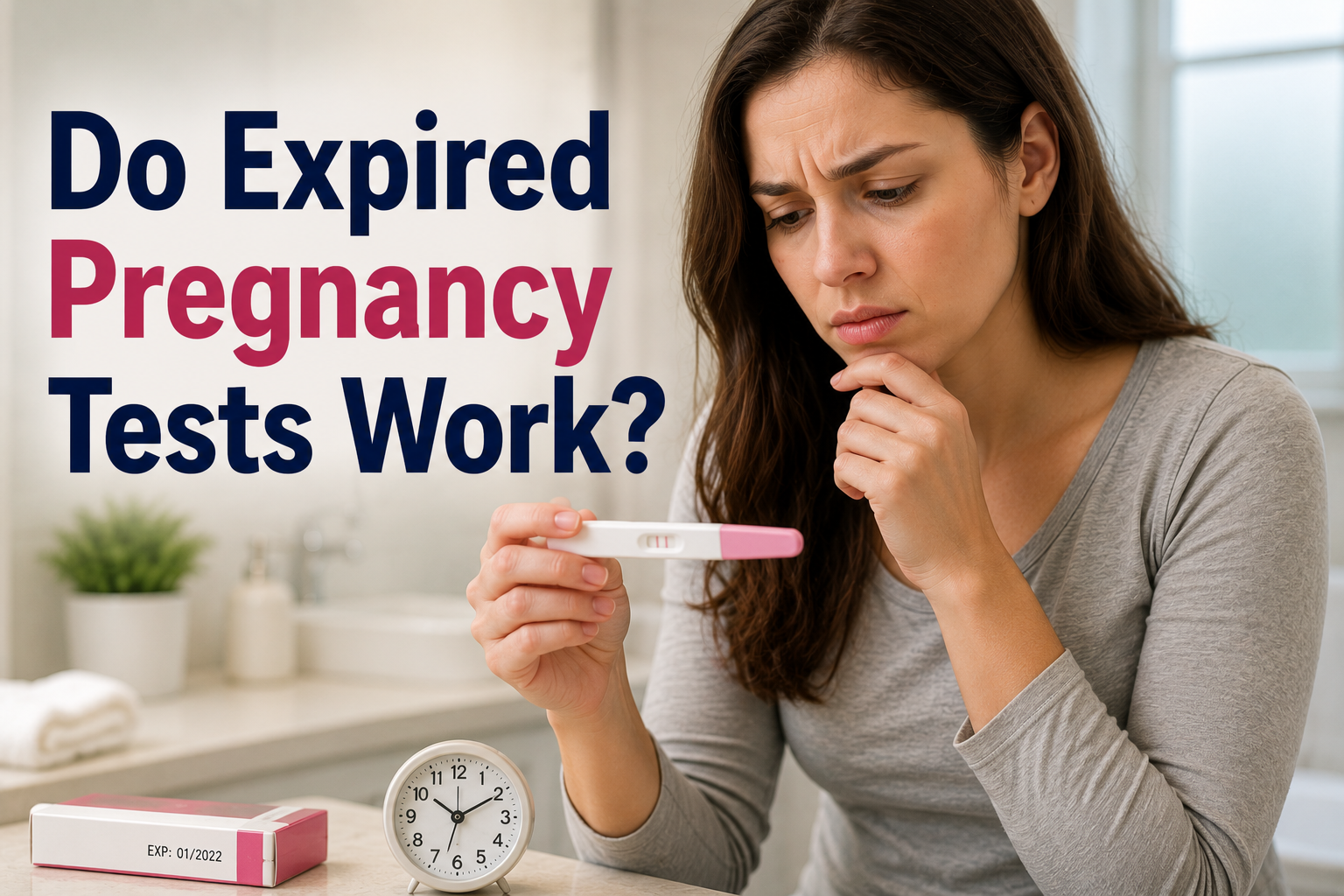
Many people find an old pregnancy test tucked away in a drawer and wonder if it can still be trusted. The short answer is that an expired pregnancy test might still work, but its accuracy is no longer guaranteed the way it was before the printed expiration date.
Chemical strips inside the test lose their sensitivity over time, which raises the chances of a false negative or a confusing, unclear result. The longer the test has been expired, the less reliable it becomes, especially if it wasn’t stored properly.
If you genuinely need a dependable answer about a possible pregnancy, using a fresh, unexpired test or getting a blood test from a doctor is always the safer route. This article breaks down exactly why expiration matters, what affects reliability, and what steps to take if an expired test is all you have on hand.
Understanding Pregnancy Tests
Before figuring out whether an expired test can be trusted, it helps to know how these tests function in the first place and why manufacturers even put an expiration date on them. Both of these basics shape the rest of this discussion.
How Pregnancy Tests Work
Pregnancy tests are designed to detect a hormone called human chorionic gonadotropin, or hCG, which the body starts producing shortly after a fertilized egg implants in the uterus. The test strip contains chemical antibodies that react specifically to this hormone when it’s present in urine.
When enough hCG binds to these antibodies, a visible line, plus sign, or digital word appears to indicate a positive result. This entire process depends on the antibodies remaining active and sensitive, which is exactly what starts to break down once a test passes its shelf life.
What Expiration Date Means for These Tests
The expiration date printed on a pregnancy test box isn’t just a formality; it reflects the period during which the manufacturer has tested and confirmed the chemical components will perform reliably. After this date, the antibodies and reactive chemicals inside the strip gradually lose potency, similar to how medication becomes less effective over time.
Manufacturers set this date based on controlled storage conditions, so real-world factors like heat or humidity can sometimes cause tests to weaken even earlier than expected. This is the core reason the question “do expired pregnancy tests work” doesn’t have a simple yes or no answer.
Where to Find the Expiration Date
The expiration date is usually printed directly on the individual test wrapper as well as on the outer box, often near a batch or lot number. It’s typically labeled clearly as “EXP” followed by a month and year, making it easy to spot before use. Checking both the box and the individual foil wrapper is a good habit, since sometimes people keep loose tests without their original packaging and lose track of this detail.
Do Expired Pregnancy Tests Actually Work?
Expired pregnancy tests can sometimes still produce a valid result, but reliability decreases the further past the expiration date you go. Understanding what happens chemically inside the test explains why results become less trustworthy over time.
The Short Answer: Sometimes, But Reliability Drops
An expired test isn’t automatically useless the moment the date passes, since the decline in accuracy tends to be gradual rather than instant. A test expired by just a few weeks may still function close to normal, while one expired by a year or more is far less dependable. The safest assumption is that the older the test, the higher the chance of an inaccurate reading, particularly a false negative.
What Happens Chemically After Expiry
Inside every pregnancy test are antibody proteins that are sensitive to environmental exposure, including air, moisture, and temperature changes. Once a test passes its expiration date, these proteins can start to break down structurally, making them less capable of binding to hCG even if the hormone is present in the urine sample. This degradation doesn’t happen uniformly, which is why some expired tests still work fine while others fail without warning.
Reagent Degradation Explained Simply
Think of the reagents in a pregnancy test like a battery that slowly loses charge over time, even when it’s not being used. As the chemical “charge” weakens, the test needs a higher concentration of hCG to trigger a visible response, which is much harder to achieve early in pregnancy when hormone levels are still low. This is precisely why expired tests are especially unreliable for detecting an early pregnancy, even if they might occasionally still work later on when hCG levels are much higher.
Factors That Affect Accuracy After Expiration
Not every expired test behaves the same way, since several outside factors influence how much accuracy has actually been lost. These details matter more than the expiration date alone.
How Long Past Expiration It Is
The gap between the expiration date and the day you’re testing plays a major role in how trustworthy the result will be. A test expired for a few weeks carries a much lower risk than one that’s been sitting in storage for two or three years, where chemical breakdown is almost certain to have progressed significantly.
Storage Conditions
Where and how a test was stored has a direct impact on its lifespan, sometimes even more than the expiration date itself. Tests kept in cool, dry places tend to hold up better, while those exposed to bathroom humidity, direct sunlight, or fluctuating temperatures degrade faster and become unreliable sooner than expected.
Brand and Type Differences
Not all pregnancy tests are built the same way, and this affects how they age. Simple strip tests generally have a longer stable shelf life since they contain fewer moving parts, while digital tests rely on both a chemical strip and internal electronic components, meaning either part failing can produce an error message or unreadable result once expired.
Whether the Test Was Opened or Unopened
An unopened, factory-sealed test has a better chance of retaining accuracy past its expiration date compared to one that was opened and exposed to air. Once the foil seal is broken, moisture and oxygen can reach the chemical strip faster, accelerating the breakdown process even if the test wasn’t actually used.
Risks of Using an Expired Test
Using an expired pregnancy test comes with a handful of specific risks that are worth understanding clearly before relying on the result. These risks range from missed pregnancies to confusing readings.
False Negatives
The most common risk with expired tests is a false negative, meaning the test shows “not pregnant” even though a pregnancy exists. This happens because the weakened reagents fail to detect lower levels of hCG, which is especially likely in early pregnancy when hormone levels haven’t risen very high yet.
False Positives
False positives are much rarer but not impossible with expired tests, and they usually happen due to chemical residue changes or evaporation lines that can be mistaken for a faint positive result. This is one reason it’s important to read results within the recommended time window and under proper lighting.
Faint or Unclear Lines
Expired tests often produce lines that are difficult to interpret, showing up faint, smudged, or inconsistent in color compared to a fresh test’s clear result. This ambiguity can leave a person uncertain rather than confident either way, which defeats the purpose of testing in the first place.
Error Messages on Digital Tests
Digital pregnancy tests that have expired are more prone to displaying error messages instead of a clear result, since their internal sensors and batteries can also degrade over time. An error message means the test should be discarded and replaced rather than reused or reread.
Signs an Expired Test May Still Be Reliable
Certain conditions make it somewhat more reasonable to trust an expired test, though none of these guarantee full accuracy. These signs simply lower the risk slightly compared to other scenarios.
Recently Expired Tests
A test that expired within the last month or two is generally in a better position than one expired for years, since chemical degradation is still in its early stages. This doesn’t make it as reliable as a fresh test, but it does reduce the likelihood of a completely failed reading.
Proper Storage With Intact Packaging
If the test was kept in its original sealed wrapper and stored in a cool, dry environment away from sunlight, it has a better chance of still functioning close to normal. Intact packaging is a strong indicator that moisture and air haven’t already compromised the internal strip.
A Clear Control Line Appears
Every pregnancy test includes a control line that confirms the test itself is working correctly, regardless of the pregnancy result. If this control line appears clearly and on time, it’s a reasonable sign that the chemical components are still active enough to function, though it still doesn’t guarantee full sensitivity to lower hCG levels.
Signs You Should NOT Trust an Expired Test
On the other hand, several warning signs suggest an expired test’s result shouldn’t be relied upon at all. Recognizing these signs can prevent unnecessary confusion or false reassurance.
Expired by Months or Years
A test that has been expired for a long stretch of time, particularly beyond a year, has almost certainly lost significant chemical potency. At this stage, any result it gives, positive or negative, should be treated with heavy skepticism.
Visible Discoloration or Damage
If the test strip shows discoloration, staining, or any physical damage to the packaging, this points to chemical breakdown or environmental exposure that has likely compromised its function. A visibly damaged test should be discarded rather than used for anything meaningful.
No Control Line Appears
If the control line fails to appear at all after using the test, this means the test itself has malfunctioned and the result is invalid, regardless of whether a second line shows up. In this case, the result cannot be interpreted in any direction and should be ignored entirely.
Poor Storage Conditions
A test that was stored somewhere like a humid bathroom cabinet or a hot car for extended periods is far more likely to have degraded faster than its printed expiration date suggests. Poor storage combined with expiration essentially compounds the risk of an inaccurate reading.
What to Do If You Only Have an Expired Test?
Sometimes an expired test is genuinely the only option available at the moment, and there are still a few practical steps that can help make the most of the situation. These steps won’t guarantee accuracy, but they can guide better decision-making.
Check the Control Line First
Before reading anything into the result itself, confirm that the control line has appeared properly, since this at least tells you the test mechanism is functioning. If there’s no control line, stop right there and treat the test as invalid rather than trying to interpret the second line.
Test at a Different Time of Day
Using first-morning urine, when hCG concentration is naturally highest, can help compensate somewhat for a weakened test’s reduced sensitivity. This won’t fix chemical degradation, but it does give the test the best possible chance of detecting hCG if it’s present.
Retest With a New Test When Possible
If there’s any way to get a fresh, unexpired test afterward, retesting is strongly recommended to confirm or rule out the initial result. Relying on a single expired test for such an important answer isn’t ideal, and a second opinion from a new test adds real confidence.
When to See a Doctor Instead
If symptoms of pregnancy are present despite a negative result from an expired test, or if there’s ongoing uncertainty, visiting a doctor for a blood test is the most reliable path forward. Blood tests can detect hCG earlier and more precisely than any at-home urine test, expired or not.
Best Practices for Pregnancy Test Storage and Shelf Life
Knowing how to store and choose pregnancy tests properly can prevent this whole dilemma from happening again in the future. A little attention to storage and shelf life goes a long way.
Ideal Storage Conditions
Pregnancy tests should be stored in a cool, dry place away from direct sunlight and away from humidity-heavy areas like bathroom cabinets near showers. Room temperature storage in a closet, drawer, or medicine cabinet located in a dry room helps preserve the chemical integrity of the test for as long as possible.
Average Shelf Life of Common Brands
Most standard pregnancy tests have a shelf life ranging from two to three years from the date of manufacture, though this varies by brand and test type. Digital tests sometimes have a slightly shorter shelf life than basic strip tests due to their added electronic components.
| Test Type | Typical Shelf Life | Sensitivity to Storage Conditions |
| Basic Strip Test | 2–3 years | Moderate |
| Midstream Test | 2–3 years | Moderate |
| Digital Test | 1.5–2.5 years | Higher |
How to Check Freshness Before Buying
When purchasing a pregnancy test, it’s worth checking the expiration date printed on the box before buying, especially if it’s from a store with slower inventory turnover or a discount retailer. Choosing a test with a longer remaining shelf life ensures it stays reliable for a longer stretch of time after purchase.
Frequently Asked Questions
Can an expired test give a false positive? Yes, though it’s uncommon, false positives can occur due to evaporation lines or chemical changes within an expired strip. Reading the result within the recommended time window helps reduce this risk significantly.
How long after expiration are tests still somewhat accurate? Tests expired by a few weeks to a couple of months carry a lower risk of failure compared to those expired by a year or more. Even so, accuracy is never guaranteed once the expiration date has passed.
Do digital tests expire faster than strip tests? Digital tests can be more sensitive to expiration because they rely on both chemical strips and electronic components, either of which can fail independently. Strip tests tend to have a slightly more stable shelf life in comparison.
Is it safe to use an expired test, health-wise? Using an expired pregnancy test doesn’t pose a direct health or safety risk, since it isn’t ingested or invasive. The concern is purely about result accuracy, not physical harm.
Conclusion
So, do expired pregnancy tests work? They can, but not with the same reliability as a fresh, unexpired test, and the risk of a false negative increases the longer a test sits past its expiration date. Storage conditions, test type, and how far past expiration the test is all play a role in whether the result can be trusted.
If an expired test is the only option, checking the control line and retesting later with a fresh test remains the smartest approach. For anyone who needs a truly dependable answer, a new test or a doctor’s blood test is always the better choice over gambling on an expired one.
RELATED ARTICLES
What Does a Torn Stomach Muscle Feel Like? Symptoms, Cause
Would Constipation Cause Fever? What You Need to Know
Left Side Back Pain Female: Causes, Symptoms & Treatment