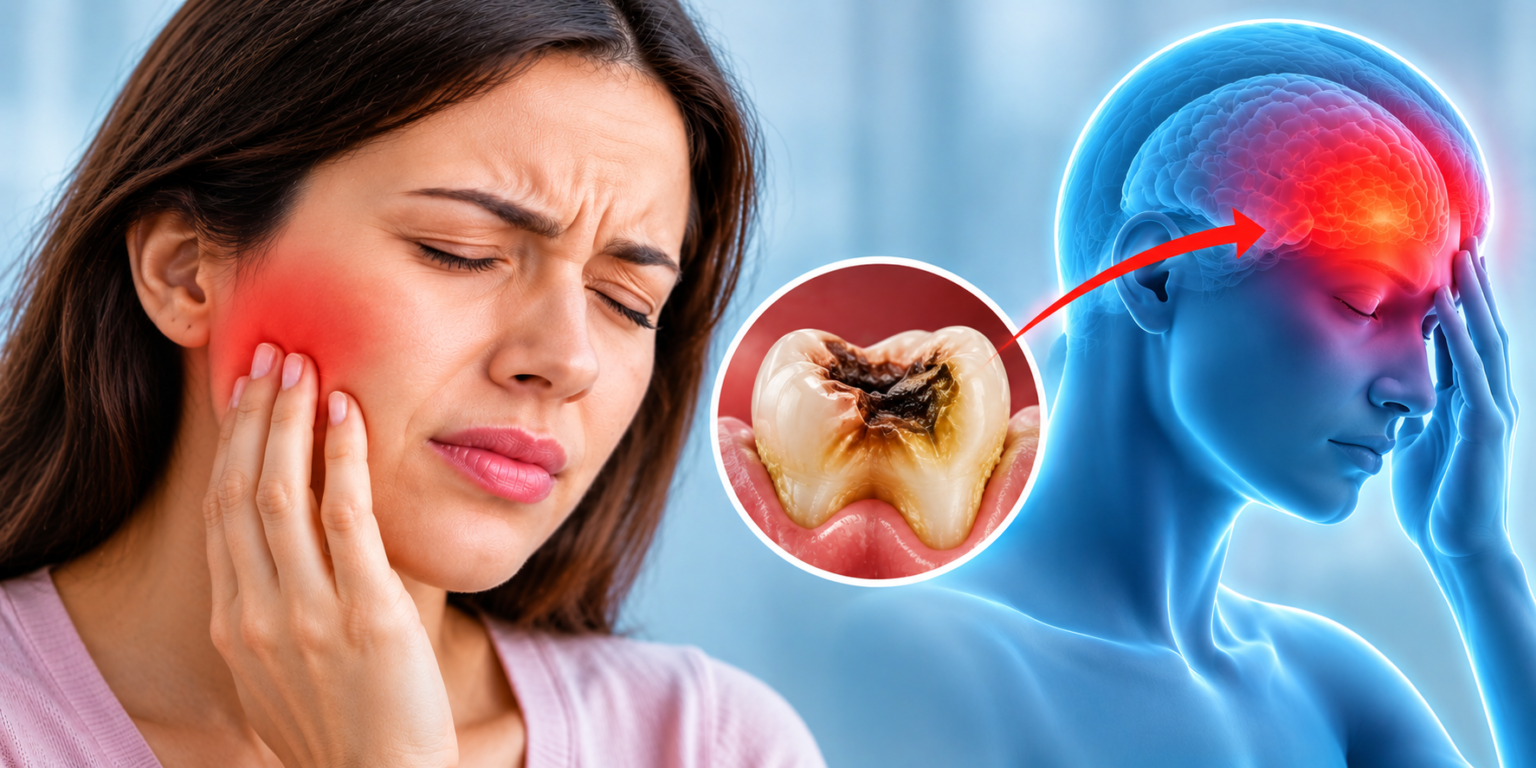
Yes, a decayed tooth can cause headaches, and this connection is more common than most people realize. When tooth decay progresses deep enough to reach the inner nerve tissue, it triggers inflammation and irritation that does not stay confined to the mouth.
This pain signal often travels along shared nerve pathways in the face and skull, showing up as a dull ache, a throbbing sensation, or even a sharp pain around the temples, jaw, or forehead. Many people treat this as a regular headache and reach for painkillers, without realizing the real source is sitting quietly in a decayed molar or cracked filling.
The connection becomes especially noticeable when the headache appears alongside tooth sensitivity, jaw stiffness, or pain that gets worse while chewing. Understanding this link early can save you from months of misdiagnosed pain and unnecessary medication.
Key Takeaways
- A decayed tooth can trigger headaches through nerve irritation, infection, or referred pain along shared facial nerve pathways.
- Headaches caused by tooth decay often appear alongside jaw pain, ear discomfort, or sensitivity to hot and cold.
- These headaches are commonly mistaken for migraines, tension headaches, or sinus issues, delaying proper treatment.
- Persistent one-sided headaches paired with dental symptoms usually point toward a dental origin rather than a neurological one.
- Timely treatment such as fillings, root canals, or infection management typically resolves the headache once the underlying decay is addressed.
How Tooth Decay Leads to Headaches?
Tooth decay does not stay isolated inside the tooth once it advances past the enamel and dentin layers. As it moves closer to the pulp, where the nerves and blood vessels live, it creates ongoing irritation that the nervous system interprets as pain in a much wider area than just the mouth. The deeper the decay travels, the more likely that pain is to be felt somewhere other than the actual cavity.
Nerve Irritation from Deep Cavities
When a cavity eats through the protective layers of a tooth, it exposes the nerve endings inside the pulp chamber to bacteria, temperature changes, and pressure. This constant irritation sends pain signals through the trigeminal nerve, which also supplies sensation to the forehead, temples, and jaw. As a result, the brain can register this irritation as a headache rather than clearly identifying it as tooth pain, especially in the early stages before the discomfort becomes sharp or localized.
Infection and Abscess Formation
If decay is left untreated, bacteria can reach the pulp and cause an infection, sometimes forming a pocket of pus known as an abscess. This infection increases pressure inside and around the tooth, which can radiate outward into the jaw, cheek, and skull. Abscess-related headaches are often more intense and may come with facial swelling, fever, or a throbbing sensation that worsens when lying down, since blood flow to the head increases in that position.
Referred Pain to Jaw, Temples, and Head
Referred pain happens when the brain misreads the origin of a pain signal because multiple areas share the same nerve pathway. Since the teeth, jaw joint, and areas around the temples are all connected through branches of the trigeminal nerve, pain from a decayed molar can easily be felt as tightness or aching near the temples or the side of the head. This is one of the biggest reasons dental headaches are so frequently mistaken for something else entirely.
Common Symptoms That Point to a Dental Cause
Certain headache patterns line up closely with dental problems rather than typical neurological triggers. Paying attention to when the pain starts, what makes it worse, and what other symptoms tag along can help you figure out whether a decayed tooth might be behind it.
Pain Worsens with Chewing or Temperature
One of the clearest signs of a dental-origin headache is that it intensifies during activities directly connected to the mouth, such as chewing, biting down, or consuming something hot or cold. If a headache consistently follows a meal or flares up after drinking iced water, the trigger is very likely related to a tooth rather than stress or vision strain, which are common causes of ordinary tension headaches.
Headache Paired with Jaw or Ear Pain
Dental headaches rarely show up completely alone. They are frequently accompanied by a dull ache in the jaw, tenderness near the ear, or a feeling of pressure along the side of the face. Since the jaw joint sits close to the ear canal, infections or nerve irritation from a decayed tooth can easily mimic an ear infection, which sometimes leads people down the wrong treatment path entirely.
One-Sided or Localized Headache Pattern
Unlike tension headaches, which often wrap around the entire head, dental-related headaches tend to stay on one side, matching the location of the affected tooth. If the pain consistently shows up on the same side as a tooth that reacts to temperature or pressure, that pattern alone is a strong clue that the two issues are connected rather than coincidental.
Why Is This Type of Headache Often Misdiagnosed?
Dental headaches are commonly confused with more familiar conditions simply because they don’t announce themselves as tooth pain. This overlap in symptoms means many people spend time treating the wrong problem before the real cause is identified.
Confused with Migraines or Tension Headaches
Migraines and tension headaches share several overlapping features with dental pain, including throbbing sensations, pressure around the temples, and sensitivity to light or noise in more severe cases. Because these conditions are far better known to the general public, people often assume a migraine or stress is the culprit and try standard headache remedies, which only mask the symptoms temporarily instead of addressing the decayed tooth causing them.
Role of Jaw Clenching and Bite Misalignment (TMJ Link)
When a tooth is decayed or painful, people naturally start chewing differently to avoid pressure on that area, which can lead to uneven bite patterns and jaw clenching over time. This altered bite places extra strain on the temporomandibular joint (TMJ), the hinge connecting the jaw to the skull, and can produce tension headaches that persist even between episodes of tooth pain, further complicating the diagnosis.
When to See a Dentist vs. a Doctor
Not every headache calls for a dental visit, so it helps to know which signs point toward the mouth and which suggest a different underlying cause altogether.
Red Flags That Signal a Dental Emergency
Facial swelling, fever, a foul taste in the mouth, or a headache that intensifies rapidly alongside tooth sensitivity are all signs that require prompt dental attention rather than general pain management. These symptoms often indicate that an infection has progressed and may need urgent treatment such as drainage or antibiotics before it spreads further into surrounding tissue.
Signs It May Not Be Tooth-Related
If the headache is accompanied by visual disturbances, nausea, sensitivity to light, or occurs in patterns unrelated to eating, chewing, or tooth sensitivity, it’s more likely tied to a neurological or sinus-related cause. In these cases, consulting a physician alongside a dentist can help rule out conditions like migraines, sinus infections, or tension-type headaches unrelated to dental health.
Treatment Options for Decay-Related Headaches
Once a decayed tooth is confirmed as the source of the headache, treatment focuses on resolving the dental issue itself rather than just managing the pain symptomatically. The right approach depends on how far the decay has progressed.
Fillings and Early-Stage Cavity Treatment
For cavities caught before they reach the nerve, a simple filling is usually enough to stop the irritation and prevent further headaches. This procedure removes the decayed portion of the tooth and seals it, cutting off the source of nerve stimulation and allowing the associated head pain to subside within a short period after treatment.
Root Canal for Nerve Involvement
When decay has reached the pulp and caused significant nerve inflammation, a root canal is typically necessary. This procedure removes the infected nerve tissue from inside the tooth, which directly addresses the source of referred pain traveling to the head. Most patients notice a significant reduction in headache frequency once the inflamed nerve has been treated.
Antibiotics and Abscess Drainage
If an abscess has formed, dentists often prescribe antibiotics to control the infection before performing drainage or further dental work. Clearing the infection reduces the pressure and inflammation responsible for the headache, and symptoms usually improve noticeably within a few days of starting treatment.
Comparison Table — Dental Headache vs. Other Headache Types
Since dental headaches share features with several common headache types, this comparison table breaks down the key differences to help identify the likely cause more accurately.
| Feature | Dental (Decay-Related) | Migraine | Tension Headache | Sinus Headache |
| Location | Usually one-sided, near affected tooth | One-sided, often with aura | Both sides, band-like pressure | Forehead, cheeks, around eyes |
| Trigger | Chewing, hot/cold foods | Light, stress, hormones | Stress, poor posture | Weather changes, congestion |
| Associated Symptoms | Jaw pain, tooth sensitivity, swelling | Nausea, light sensitivity | Neck and shoulder tension | Nasal congestion, facial pressure |
| Relief Pattern | Improves after dental treatment | Managed with migraine medication | Eases with rest, stretching | Improves with decongestants |
| Worsens When Lying Down | Often yes (increased blood flow) | Sometimes | Rarely | Sometimes |
Prevention Tips to Avoid Decay-Related Head Pain
Preventing tooth decay is the most reliable way to avoid this entire chain of dental headaches in the first place. Brushing twice daily with fluoride toothpaste and flossing regularly removes the plaque buildup that leads to cavities before they have a chance to reach the nerve.
Routine dental checkups every six months allow small cavities to be caught and filled early, long before they progress to the point of causing referred pain. Reducing sugary snacks and acidic drinks also slows down enamel erosion, giving teeth a stronger defense against decay.
For anyone who already experiences frequent headaches, keeping a simple log of when the pain occurs alongside any tooth sensitivity can make it much easier to spot a dental pattern early and get it addressed before it worsens.
Frequently Asked Questions
Can a cavity cause headaches on one side only? Yes, cavities typically cause one-sided headaches that match the location of the affected tooth, since the pain travels through nerve branches on that same side of the face.
How long does dental headache pain last? It varies depending on the severity of the decay, but the headache usually persists or recurs until the underlying tooth issue is treated, rather than resolving permanently on its own.
Can wisdom tooth decay cause headaches? Yes, decayed or impacted wisdom teeth are a common headache trigger because of their location near the jaw joint and nerve pathways at the back of the mouth.
Will a headache go away after a filling? In most cases, yes. Once the source of nerve irritation is removed and the tooth is sealed, the referred headache typically fades within a few days.
Can tooth decay cause headaches and dizziness? In cases involving infection or significant inflammation, some people report dizziness alongside headaches, though this combination should be evaluated promptly by a dentist.
Conclusion
A decayed tooth is a far more common headache trigger than most people expect, often hiding behind symptoms that look like migraines or tension headaches.
Recognizing the connection between tooth pain, jaw discomfort, and recurring head pain can lead to faster, more accurate treatment. Addressing the decay directly, whether through a filling, root canal, or infection management, usually resolves the headache for good.
Related Post’s
How Much Does Physical Therapy Cost? Price Guide
Does Salicylic Acid Help With Acne Scars? Full Guide
Is Robitussin Safe in Pregnancy? A Trimester-Wise Guide