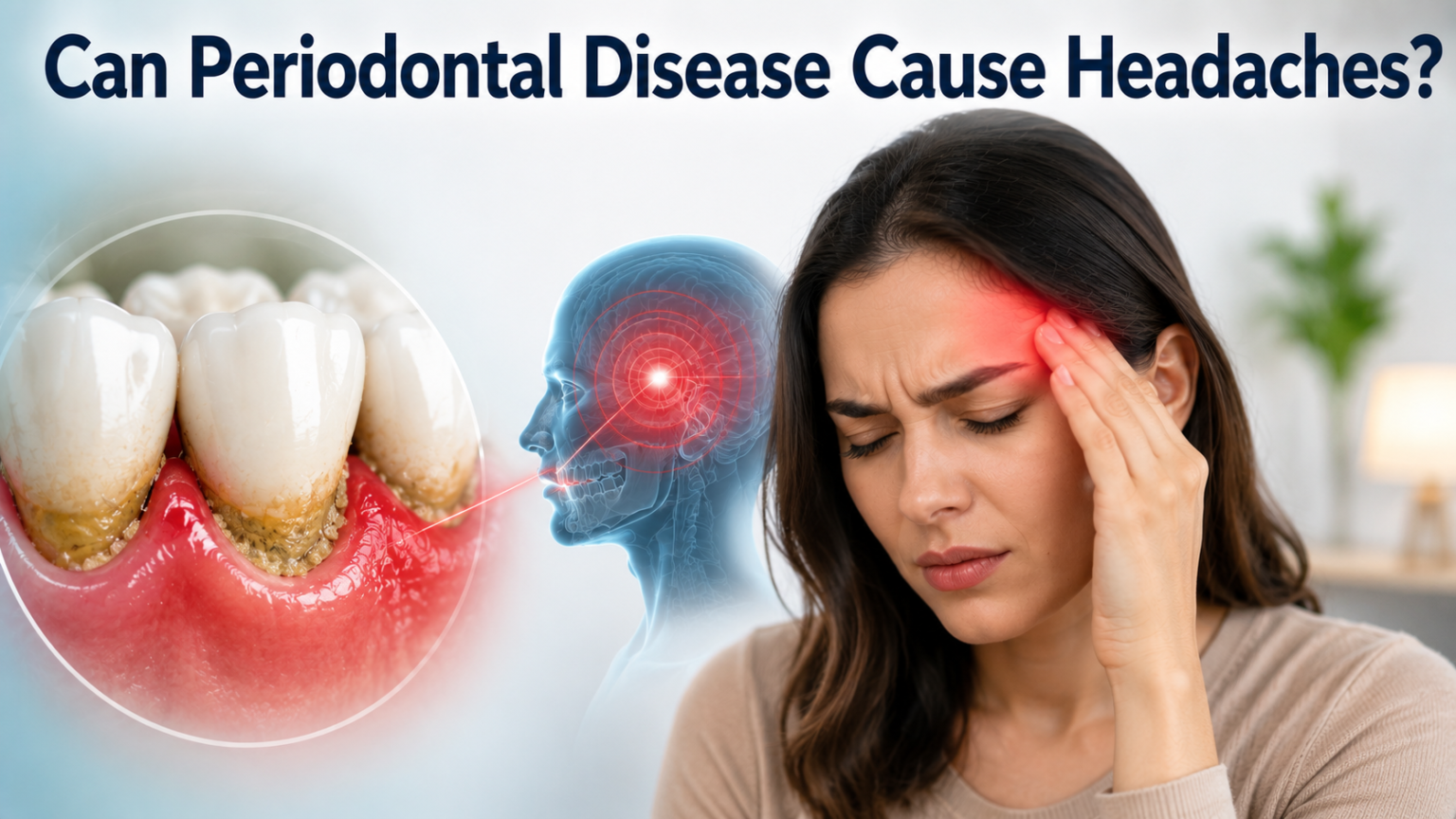
Yes, periodontal disease can cause headaches in several documented ways, even though most people never connect their gums to their head pain. Chronic gum infection creates inflammation that doesn’t always stay contained to the mouth; it can travel through nerve pathways, disturb your bite, strain your jaw joint, and even release inflammatory chemicals into your bloodstream.
Add to this the fact that many people with gum disease also grind their teeth at night without realizing it, and you get a perfect storm for recurring headaches.
The connection isn’t guaranteed for everyone, but it is common enough that dentists and doctors now treat it as a real diagnostic possibility. Understanding exactly how this link works can help you figure out whether your headaches are dental in origin, and what to do about it.
Understanding Periodontal Disease and Its Stages
Periodontal disease is a progressive infection of the gums and the bone that supports your teeth, and it rarely appears overnight. It usually begins quietly and worsens the longer it goes untreated, which is exactly why its effects can spread beyond the mouth.
Gingivitis and Periodontitis Explained
Gingivitis is the earliest stage, marked by red, swollen, or bleeding gums, and it is usually reversible with better hygiene. Left untreated, it progresses into periodontitis, where the infection reaches deeper tissue and bone. At this advanced stage, the inflammation becomes chronic and is far more likely to create problems outside the mouth, including headaches.
Common Causes and Risk Factors
Plaque buildup from inconsistent brushing and flossing is the primary trigger, but the disease rarely acts alone. Smoking, uncontrolled diabetes, hormonal changes, certain medications, and genetic predisposition all increase susceptibility. People carrying several of these risk factors tend to experience more aggressive gum disease, which raises the likelihood of related symptoms like jaw tension and headaches.
Types of Headaches You Should Know
Not every headache has the same origin, so it helps to understand the main categories before linking any of them to your gums. Recognizing the pattern of your pain is the first step toward finding its real cause.
Tension, Migraine, Sinus, and Cluster Headaches
Tension headaches feel like a tight band around the head and are the type most frequently linked to jaw and dental issues. Migraines are more intense, often one-sided, and linked to nerve sensitivity rather than muscle strain alone. Sinus headaches cause pressure around the cheeks and forehead, while cluster headaches are rare but severe, appearing in repeated short attacks around one eye.
How Gum Disease Triggers Headaches?
The pathway from infected gums to a pounding head is not a single mechanism but a combination of several biological processes happening at once. Once you see how closely the mouth, jaw, and head are connected, the link becomes much easier to understand.
Referred Pain and Nerve Pathways
The trigeminal nerve supplies sensation to your teeth, gums, and much of your face and scalp. When gum tissue becomes inflamed or infected, pain signals can travel along shared nerve branches and be felt as head pain rather than tooth pain. This is known as referred pain, and it explains why a dental problem can feel like a headache with no obvious oral symptoms.
TMJ Dysfunction and Bite Changes
Advanced periodontal disease can cause teeth to shift, loosen, or recede, which alters how your upper and lower jaw meet. This misalignment forces the temporomandibular joint, or TMJ, to compensate with extra strain every time you chew or speak. Over time, this added pressure commonly radiates upward as tension headaches or pain around the temples.
Teeth Grinding (Bruxism) Connection
Many people with gum disease also grind or clench their teeth, often during sleep and without any awareness of it. Grinding overworks the jaw muscles connected to the temples and scalp, and gum inflammation can make teeth more sensitive, encouraging further clenching as a subconscious response. This repeated muscle strain is one of the most direct contributors to dental-related headaches.
Systemic Inflammation Effects
Chronic periodontal infection doesn’t stay isolated in the mouth; it triggers the release of inflammatory markers such as C-reactive protein and various cytokines into the bloodstream. These substances are known contributors to systemic inflammation, and research has increasingly linked elevated inflammatory markers to a higher frequency of headache episodes. In this way, gum disease can affect head pain even without any direct nerve or jaw involvement.
Sinus Proximity to Upper Teeth
The roots of your upper back teeth sit remarkably close to the maxillary sinuses. When periodontal infection develops in this region, bacteria and inflammation can spread upward into the sinus cavity, producing pressure and pain that feels identical to a sinus headache. This is one reason dental infections are sometimes mistaken for seasonal sinus problems.
Symptoms That Point to a Dental-Related Headache
Certain patterns make it easier to suspect your gums rather than a purely neurological cause. Paying attention to timing and accompanying oral symptoms can guide you toward the right specialist.
Warning Signs to Watch For
A headache is more likely dental in origin if it worsens while chewing, appears alongside jaw stiffness, or is accompanied by gum bleeding, swelling, or persistent bad breath. Morning headaches paired with a sore jaw often point toward nighttime grinding rather than a standalone neurological issue.
| Symptom Pattern | Likely Connection |
| Headache worsens while chewing | TMJ strain from gum disease |
| Morning headache with sore jaw | Nighttime teeth grinding |
| Headache with gum bleeding or swelling | Active periodontal infection |
| Pressure around cheeks and upper teeth | Sinus involvement from dental infection |
| Recurring temple pain with tooth sensitivity | Referred nerve pain |
Who Is Most at Risk
People with untreated or advanced gum disease face the highest risk, especially when the condition has already caused bone loss or tooth movement.
Chronic teeth grinders, individuals with pre-existing TMJ disorders, and those with generally poor oral hygiene habits are also more likely to experience this overlap.
Smokers and people managing diabetes tend to see faster progression of gum disease, which further raises their chances of related headache symptoms.
Diagnosis: How Professionals Identify the Connection
Confirming whether periodontal disease is behind your headaches requires input from both a dentist and, in some cases, a physician. A structured evaluation rules out other causes while checking for oral warning signs.
Dental Examination Steps
A dentist typically begins with a full periodontal probing to measure gum pocket depth, followed by X-rays to check for bone loss around the teeth. If jaw pain is present, a TMJ evaluation is added to assess joint movement and muscle tenderness. Should symptoms persist despite a healthy dental exam, referral to a physician or neurologist helps rule out unrelated headache disorders.
Treatment and Management Options
Once periodontal disease is confirmed as a contributing factor, treatment usually addresses both the gum infection and its downstream effects on the jaw. Combining dental and lifestyle interventions tends to bring the fastest relief.
Periodontal Treatments
Scaling and root planing, often called a deep cleaning, removes bacteria and tartar from below the gumline and is the standard first step. In more advanced cases, antibiotics or surgical procedures may be needed to control the infection and restore gum health. As inflammation decreases, many patients report a noticeable drop in headache frequency.
TMJ and Bruxism Management
A custom night guard is commonly prescribed to protect teeth from grinding and reduce pressure on the jaw joint. Physical therapy, jaw exercises, and stress-reduction techniques can further ease TMJ-related tension. Addressing bruxism directly often resolves the muscle-based headaches that gum disease helped set in motion.
Prevention Tips
Preventing this entire chain of problems starts with consistent oral care and early intervention. The following habits go a long way toward reducing both gum disease and its related headaches:
- Brush twice daily and floss once daily to control plaque buildup
- Schedule dental checkups and cleanings every six months
- Manage stress levels to reduce unconscious jaw clenching
- Treat gum bleeding or swelling as soon as it appears, rather than waiting
When to See a Doctor or Dentist
Persistent headaches that don’t respond to typical remedies, especially when paired with gum bleeding, loose teeth, or jaw pain, deserve prompt attention.
Seek care quickly if you notice facial swelling, fever alongside dental pain, or headaches that worsen progressively over days rather than improving.
Frequently Asked Questions
Can gum disease cause migraines? Gum disease is more strongly linked to tension-type headaches through jaw strain and inflammation, though severe inflammation may also aggravate migraine frequency in sensitive individuals.
How do I know if my headache is dental-related? Look for headaches that intensify while chewing or first thing in the morning, paired with gum or jaw symptoms rather than isolated head pain alone.
Can treating gum disease stop headaches? Many patients notice reduced headache frequency once the underlying infection and related jaw strain are properly treated, though results vary by individual case.
Is this connection common or rare? It isn’t universal, but it’s frequent enough that dentists now consider periodontal health during headache evaluations, particularly when other causes have been ruled out.
Conclusion
So, can periodontal disease cause headaches? The evidence points to yes for a meaningful number of people, through referred nerve pain, TMJ strain, bruxism, systemic inflammation, and sinus involvement. If your headaches keep returning alongside gum bleeding, jaw soreness, or bad breath, a dental checkup is a smart next step before assuming the cause lies elsewhere.
Related Article’s
Do You Get Pimples on Your Tongue? Causes, Symptoms and Treatment Guide
Does Salicylic Acid Help With Acne Scars? Full Guide
Can Braces Fix an Overbite? Causes, Treatment, and Recovery