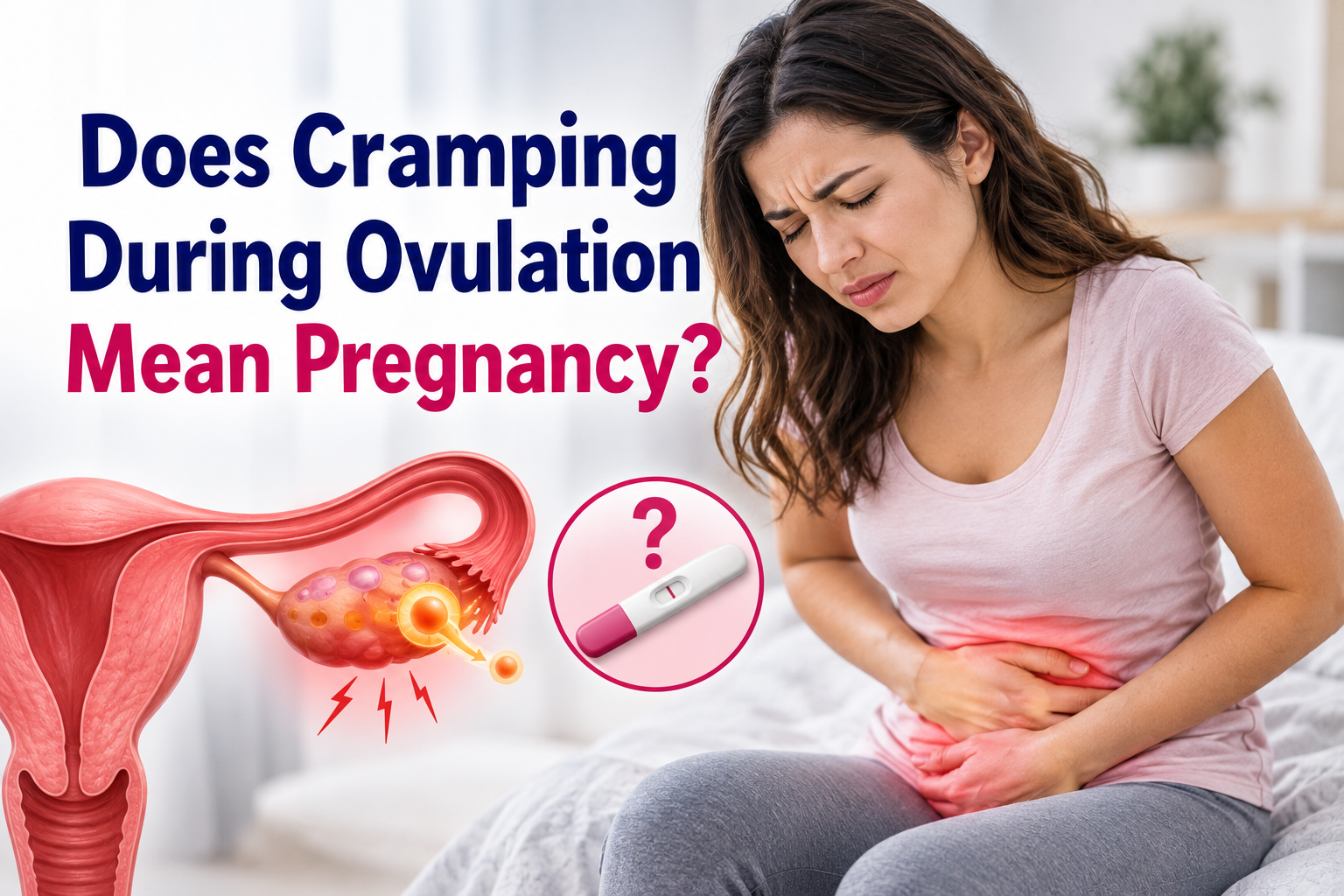
No, cramping during ovulation does not mean pregnancy. This cramping, known as mittelschmerz, happens when the ovary releases an egg, which occurs before fertilization or implantation can even take place.
Since pregnancy only begins after the egg is fertilized and implants in the uterus, ovulation-time cramps cannot be a pregnancy sign at that exact moment. Many people confuse this pain with early pregnancy because both happen in the same general area of the body.
Understanding the timing of your cycle makes it much easier to tell these two types of cramping apart. This guide breaks down everything in simple, easy-to-follow language.
Understanding the Menstrual Cycle Basics
Before comparing cramps, it helps to understand the three main phases of the menstrual cycle. Each phase brings different hormonal changes, and cramping can show up at different points depending on what your body is doing.
Follicular Phase
This phase starts on the first day of your period and continues until ovulation. During this time, the body prepares an egg inside a follicle and slowly rebuilds the uterine lining. Cramping in this phase is usually related to the tail end of your period rather than anything pregnancy-related.
Ovulation Phase
Ovulation is a short window, usually just one day, when the mature egg is released from the ovary. This is the exact moment when mittelschmerz cramping tends to occur. It is a normal physical response and has nothing to do with conception happening yet.
Luteal Phase
After ovulation, the luteal phase begins and lasts until your next period starts. If implantation happens, it occurs somewhere in the middle to later part of this phase. Any cramping tied to early pregnancy would only be possible during this window, never during ovulation itself.
What Is Ovulation Cramping?
Mittelschmerz is the medical term for the mild pelvic pain some people feel around ovulation. It is caused by the follicle stretching and rupturing as it releases the egg, sometimes along with a small amount of fluid or blood irritating the pelvic lining.
Why It Happens
When the follicle ruptures to release the egg, the surrounding tissue can stretch and irritate nearby nerves. Some fluid or a small amount of blood may also leak into the pelvic cavity, which can cause temporary irritation. This is a completely natural part of the ovulation process and is not linked to pregnancy occurring.
Typical Timing and Side
Ovulation cramping usually happens on one side of the lower abdomen, matching whichever ovary released the egg that month. It tends to occur roughly midway through the cycle, around day 14 in a standard 28-day cycle, though this varies from person to person. The side of the pain can switch from month to month depending on which ovary is active.
How Long It Lasts
For most people, mittelschmerz lasts anywhere from a few minutes to a few hours, though in some cases it can stretch across one or two days. It is generally mild to moderate and does not usually require medical treatment unless the pain becomes severe or unusual.
What Does Ovulation Cramping Feel Like?
Ovulation cramping can feel different from person to person, ranging from a light twinge to a more noticeable ache. Some people barely notice it, while others find it distracting enough to track every month as a natural ovulation indicator.
Sharp vs Dull Sensations
Some people describe ovulation cramps as a sudden sharp twinge that fades quickly, while others feel a duller, more constant ache. Both patterns are considered normal, and the sensation can even change from cycle to cycle for the same person.
Location and Spread
This cramping is typically felt low in the pelvis, on one specific side rather than across the whole abdomen. Occasionally, it can radiate slightly toward the lower back or upper thigh, though it rarely spreads as widely as period cramps do.
Can Cramping Really Indicate Pregnancy?
Cramping can be an early pregnancy sign, but only when it happens at the right point in the cycle, well after ovulation, not during it. This is where implantation cramping comes into the picture.
What Is Implantation Cramping
Implantation cramping happens when a fertilized egg attaches itself to the uterine lining, roughly six to twelve days after ovulation. It tends to feel like light, brief twinges or a mild pulling sensation, often lower and more central than ovulation pain. Because it occurs so much later in the cycle, it is physically impossible for cramping felt during ovulation itself to represent implantation.
Why Timing Rules Out Ovulation-Day Pregnancy Signs
At the moment of ovulation, the egg has not yet been fertilized, let alone implanted, so no pregnancy-related process could be causing pain at that exact time. Any cramping felt on ovulation day is tied to the egg release itself. This is precisely why the answer to does cramping during ovulation mean pregnancy is no.
Ovulation Cramping vs Implantation Cramping vs PMS Cramping
Seeing these three types side by side makes the differences much clearer, especially since they are so commonly mixed up.
| Feature | Ovulation Cramping | Implantation Cramping | PMS Cramping |
| Timing | Mid-cycle, around ovulation | 6–12 days after ovulation | Just before or during period |
| Duration | Minutes to a couple of days | A few hours to a couple of days | Several days |
| Intensity | Mild to moderate | Very mild, light twinges | Mild to strong |
| Location | One-sided, lower pelvis | Lower, more central | Across lower abdomen |
| Extra Signs | Slight discharge changes | Light spotting, fatigue | Bloating, mood changes |
Other Symptoms That Occur Around Ovulation
Ovulation brings a cluster of physical changes beyond cramping, and recognizing them can help you understand your cycle better rather than confusing them with pregnancy symptoms.
Cervical Mucus and Body Temperature Changes
Around ovulation, cervical mucus often becomes clearer and more stretchy, similar to raw egg whites, which helps sperm travel more easily. Basal body temperature also tends to rise slightly right after ovulation due to increased progesterone. Tracking both together is one of the most reliable ways to confirm ovulation happened.
Breast Tenderness and Mild Spotting
Some people notice breast tenderness or very light spotting around ovulation, caused by the hormonal shifts involved in releasing the egg. These signs are separate from pregnancy and typically resolve within a day or two once hormone levels stabilize.
Early Pregnancy Symptoms for Comparison
Genuine early pregnancy symptoms usually show up closer to or after a missed period rather than at ovulation. Common signs include a missed period, nausea, ongoing fatigue, breast changes, and more frequent urination.
Mild cramping can appear too, but it lines up with implantation timing, not ovulation timing. Comparing the timing of these symptoms against your own cycle tracking is far more useful than judging by sensation alone.
When Cramping Might Signal Something Else
Not all pelvic cramping is related to ovulation, implantation, or PMS. Sometimes cramping points to an underlying condition that deserves medical attention.
Possible Underlying Conditions
Ovarian cysts can cause cramping that lingers longer than typical mittelschmerz, sometimes with bloating or pressure. Endometriosis often causes cramping that is more intense than usual and may occur outside the expected ovulation window. Pelvic inflammatory disease can cause cramping alongside unusual discharge or fever, and requires prompt medical care.
Ectopic Pregnancy Warning Signs
An ectopic pregnancy can cause sharp, one-sided cramping along with dizziness, shoulder pain, or heavy bleeding, and it is considered a medical emergency. This type of pain is different from normal ovulation cramping and should never be ignored if a pregnancy test has come back positive.
When to See a Doctor
You should see a doctor if cramping becomes severe, is paired with fever, dizziness, or heavy bleeding, or simply feels different from your usual monthly pattern.
Persistent one-sided pain that doesn’t fade after a day or two is also worth having checked. Trusting your own sense of what feels normal for your body is one of the best tools you have here.
How to Track Symptoms Accurately?
Using ovulation predictor kits, tracking basal body temperature, and logging cramps in a cycle app together give a much clearer picture than guessing from sensation alone.
Noting exactly when cramping occurs relative to your ovulation date helps you tell mittelschmerz apart from anything implantation-related. Over a few cycles, these patterns become easier to recognize and far more reliable than relying on memory.
Frequently Asked Questions
Can you feel pregnant right after ovulation? Not really, since pregnancy symptoms typically take at least a week or two to develop after fertilization and implantation occur.
How soon can implantation cramps start? Implantation cramps generally start around six to twelve days after ovulation, once the fertilized egg reaches the uterine lining.
Is cramping a reliable pregnancy sign? On its own, cramping is not a reliable sign since it can result from ovulation, PMS, or other causes; a pregnancy test remains the only accurate confirmation.
Can ovulation and pregnancy symptoms overlap? Some sensations can feel similar, but the timing differs enough that tracking your cycle usually clears up the confusion.
Conclusion
So, does cramping during ovulation mean pregnancy? Based on how the menstrual cycle works, the answer stays no, since ovulation cramps happen before fertilization is even possible.
Implantation cramping, the type actually linked to early pregnancy, shows up much later in the cycle and feels noticeably different.
Paying attention to timing, tracking your symptoms, and using a pregnancy test when needed will always give you a far more accurate answer than judging by cramping alone.
RELATED ARTICLES
Can You Take Advil on an Empty Stomach? Safety Guide & Tips
What Is a Bone Spur in Foot? Causes, Symptoms & Treatment
Pain in Arms After Sneezing: Causes, Warning Signs, and How to Get Relief
What Can You Eat With Braces? Complete Food Guide
Can Jaw Pain Be Caused by an Ear Infection? Full Guide & Relief Tips