



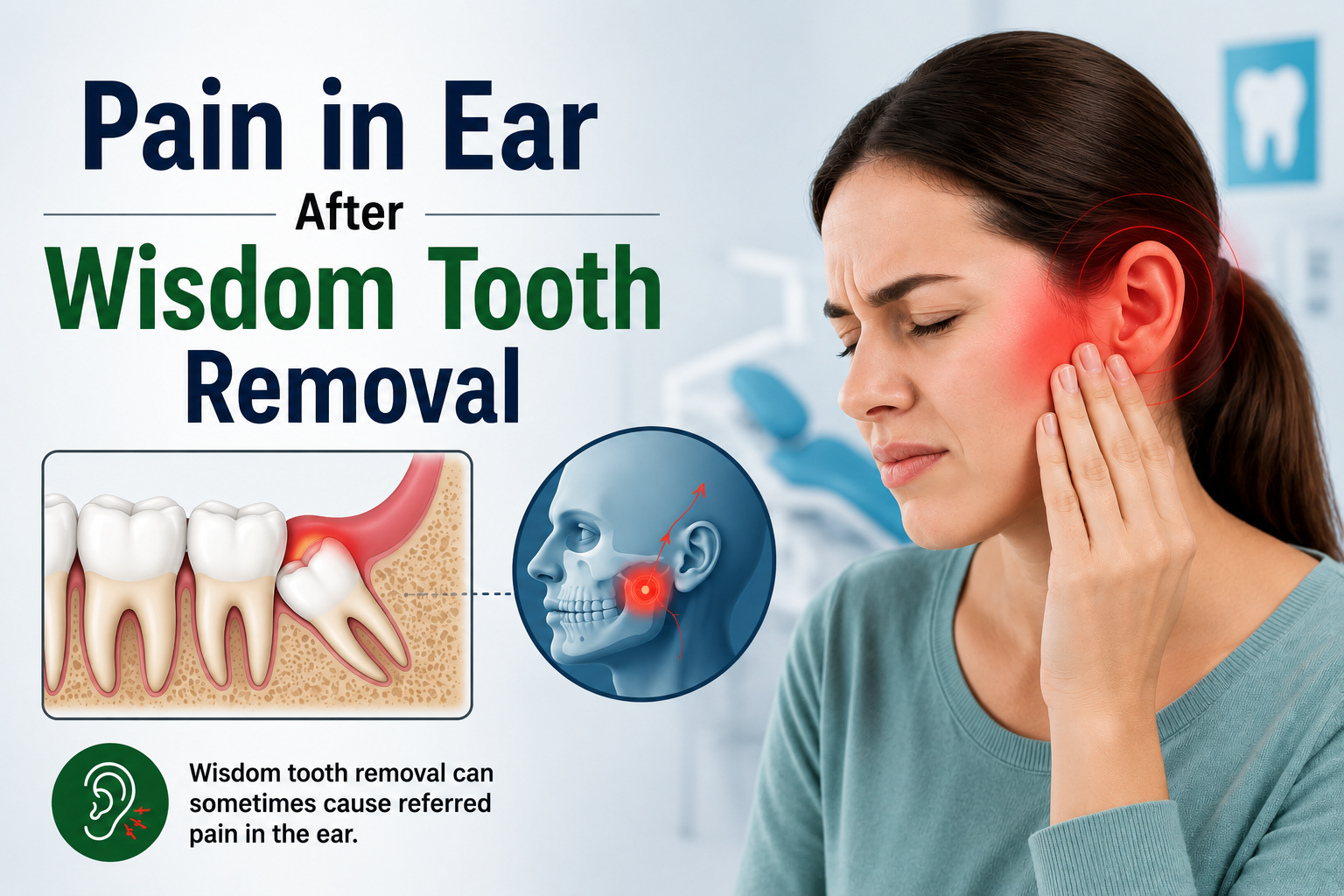
Having your wisdom tooth pulled out is one of the most common dental procedures in the world, yet many patients are completely caught off guard by one particular side effect — a dull, throbbing ache deep inside the ear.
If you are currently experiencing pain in ear after wisdom tooth removal, the first thing you need to know is that you are not alone, and in most cases, you are not in danger. This article walks you through everything — from why it happens and what it feels like, to home relief methods and warning signs that something more serious may be going on.
Why Does Ear Pain Happen After Wisdom Tooth Removal?
Ear pain following a wisdom tooth extraction does not mean something has gone wrong inside your ear. In the vast majority of cases, the ear itself is perfectly healthy — the pain is simply traveling there from a different source. This is known as referred pain, a well-understood medical phenomenon where discomfort is felt in a location that is separate from the actual site of injury or inflammation.
The Role of the Auriculotemporal Nerve
The human jaw and ear share a nerve pathway called the auriculotemporal nerve, which is a branch of the trigeminal nerve — one of the largest sensory nerves in the face. When a wisdom tooth is removed, especially a lower (mandibular) molar, the surrounding tissues experience trauma, swelling, and inflammation.
The pain signals generated at the extraction socket travel along this shared nerve pathway, and the brain interprets part of that signal as coming from the ear. This is not a malfunction — it is simply how the nervous system is wired. The same principle explains why people having a heart attack sometimes feel pain down their left arm, even though the heart itself is located in the chest.
Jaw Muscle Fatigue and Swelling
Another contributing factor is jaw muscle strain. During an extraction procedure, patients must keep their mouth open — sometimes for an extended period, especially if the tooth was impacted or required surgical removal.
This extended stretching of the jaw muscles, particularly the masseter and temporalis, creates tension that can radiate upward toward the ear and temple.
Additionally, post-surgical swelling in the cheek and jaw tissues can place pressure on nearby anatomical structures, including those in close proximity to the ear canal, further intensifying the sensation.
Normal vs. Abnormal Ear Pain: How to Tell the Difference?
Understanding the difference between expected discomfort and a warning sign is the most important skill a recovering patient can have. Not all ear pain is the same, and knowing what to look for can save you a lot of unnecessary anxiety — or, on the other hand, help you catch a complication early.
The following table provides a clear side-by-side comparison to help you assess your own situation:
| Feature | Normal ear pain | Abnormal ear pain |
| Onset | Within 1–2 days of extraction | Starts or worsens after day 3–4 |
| Pattern | Gradually improving | Getting worse over time |
| Severity | Mild to moderate | Severe, intense throbbing |
| Fever | No | Yes (above 38°C / 100.4°F) |
| Discharge | None | Pus or foul smell from socket |
| Hearing | Normal | Muffled or reduced |
| Response to painkillers | Effective | Little to no relief |
| Duration | Resolves within 5–7 days | Persists beyond 7–10 days |
Red Flag Symptoms You Should Not Ignore
There are specific symptoms that go beyond what is expected after a routine extraction. If you notice any of the following alongside your pain in ear after wisdom tooth removal, contact your dentist or oral surgeon without delay:
- Fever above 38°C that does not go away with medication
- Severe swelling that is spreading toward your neck or throat
- Jaw that cannot open more than a finger’s width (trismus)
Dry Socket: The Most Common Cause of Severe Ear Pain
Dry socket — medically known as alveolar osteitis — is by far the most frequent complication following wisdom tooth extraction, and it is also the most common reason why patients experience severe pain in the ear after wisdom tooth removal that worsens instead of improves.
What Is Dry Socket and Why Does It Happen?
When a tooth is extracted, the empty socket fills with a blood clot that acts as a natural bandage. This clot protects the underlying bone and nerves while healing takes place. In some cases, however, this clot either dissolves prematurely or is physically dislodged — leaving the bone exposed directly to air, food, and bacteria.
The exposed bone causes intense, radiating pain that most patients describe as throbbing and unrelenting, and because the bone is so close to nerve pathways connected to the ear, the pain frequently spreads upward and is felt as deep ear pain.
Who Is at Higher Risk?
Certain factors significantly increase the likelihood of developing dry socket. These include:
- Cigarette smoking or tobacco use of any kind within 72 hours of surgery
- Using a drinking straw, which creates suction that can dislodge the clot
- Women taking oral contraceptives, due to hormonal effects on clot stability
- Poor oral hygiene prior to the procedure
- A history of dry socket after previous extractions
- Difficult or surgical extractions, particularly of impacted lower wisdom teeth
Other Medical Causes Worth Knowing
While dry socket is the leading culprit, there are several other conditions that can cause or contribute to ear pain in the period following a wisdom tooth extraction.
| Condition | Key symptoms | Action needed |
| Post-extraction infection | Fever, swelling, pus, throbbing pain | Antibiotics from dentist |
| TMJ irritation | Jaw clicking, limited mouth opening, deep ear ache | Jaw rest, anti-inflammatories |
| Otitis media (ear infection) | Ear fullness, muffled hearing, possible discharge | See a doctor |
| Nerve bruising | Tingling, numbness, unusual pain pattern | Monitor; consult dentist |
TMJ (temporomandibular joint) irritation deserves special mention here. The wisdom tooth extraction process places significant mechanical stress on the jaw joint.
Home Remedies and Pain Relief Tips
Managing pain in the ear after wisdom tooth removal at home is entirely possible in the first few days, provided the pain is mild to moderate and improving. The following practical steps are safe, effective, and easy to follow:
Diet: Stick to soft, cool foods such as yogurt, mashed potatoes, smoothies (without a straw), scrambled eggs, and soup. Avoid anything crunchy, chewy, spicy, hot, or sticky for at least five to seven days.
Medication: Ibuprofen (400mg every 6–8 hours with food) is the preferred painkiller for dental pain because it targets both pain and inflammation simultaneously. If ibuprofen is not suitable for you, paracetamol is a reasonable alternative. Avoid aspirin, as it can increase the risk of bleeding at the extraction site.
Salt water rinse: Starting 24 hours after the extraction, rinse gently with a solution of half a teaspoon of salt dissolved in one cup of warm water. Do this two to three times a day, especially after meals. The key word is gently — vigorous swishing can disturb the blood clot.
Sleep position: Keep your head elevated by sleeping with an extra pillow for the first few nights. Lying completely flat increases blood pressure to the face, which worsens throbbing and can intensify ear pain.
When to See a Doctor or Dentist?
Most cases of pain in ear after wisdom tooth removal resolve on their own with basic home care. However, the following situations require professional attention rather than a wait-and-see approach.
You should call your dentist within 24 to 48 hours if pain is worsening after day three, if you notice a persistent bad smell or taste coming from the socket, or if the ear pain is severe enough to disrupt your sleep or daily activity despite taking painkillers. These are the classic signs of dry socket, and the sooner it is treated, the sooner you will feel relief.
Recovery Timeline and Prevention Tips
Understanding the general healing timeline helps set realistic expectations and reduces anxiety during recovery.
| Time period | What to expect |
| Day 1–2 | Peak swelling and pain; ear ache is common |
| Day 3–4 | Pain should begin reducing if healing is on track |
| Day 5–7 | Most referred ear pain resolves; socket closing |
| Week 2–4 | Gum tissue fully closes over the socket |
| 6–8 weeks | Underlying bone has largely healed |
| Up to 6 months | Complete bone remodeling finishes |
Frequently Asked Questions
Is ear pain always normal after wisdom tooth removal?
Yes, mild to moderate referred ear pain is very common and expected in the first few days. It results from shared nerve pathways between the jaw and ear, and it typically resolves within five to seven days without any specific treatment.
Can I use ear drops to relieve this pain?
No. Since the pain originates in the jaw and not the ear itself, ear drops will have no effect. The correct approach is oral pain relief, jaw rest, and proper post-extraction wound care.
What if my ear pain comes back after it has improved?
A return or increase in pain after initial improvement — especially around day three to five — is the classic sign of dry socket. Contact your dentist promptly for examination and treatment.
How long does ear pain last after wisdom tooth removal?
In most uncomplicated cases, referred ear pain lasts between three and seven days. If it persists beyond ten days or is getting worse rather than better, it warrants a professional evaluation.
Conclusion
Pain in the ear after wisdom tooth removal is one of the most commonly misunderstood aspects of dental recovery, yet the explanation behind it is both logical and reassuring.
Your jaw and ear share nerve pathways, and the trauma of extraction sends signals along those paths — making your ear feel what your jaw is actually experiencing.
In the vast majority of cases, this discomfort is temporary, manageable, and a completely normal part of the healing process.
Related Articles
Can Caffeine Cause Joint and Muscle Pain? Causes, Symptoms & Relief Tips
What Is Optimal Health? A Complete Guide to Physical, Mental, and Emotional Wellness
Estrella Women’s Health Center: Complete Care Approach, and Women’s Health Solutions
Does Tanning Help Acne? What Dermatologists Really Say
How to Get Rid of Numbness After Dentist: Causes, Remedies, and Recovery Tips