Learning how to fix a loose tooth starts with figuring out why it’s loose in the first place. A tooth that shifts when you press it with your tongue can feel alarming, especially if it wasn’t loose yesterday. This guide walks through the real causes, safe first steps you can take at home, and the professional treatments dentists actually use — plus the warning signs that mean you shouldn’t wait for an appointment.
Tooth mobility in adults is never “normal,” even if it’s minor. The good news is that many causes are treatable, and catching the problem early usually means simpler, less expensive care.
Key Takeaways
- A loose adult tooth is almost always caused by gum disease, trauma, or bite-related stress on the tooth’s supporting structures.
- Minor looseness from a recent injury or intense flossing can sometimes stabilize on its own within a few weeks.
- Loose teeth caused by periodontal disease will keep getting worse without professional treatment — home care alone won’t reverse bone loss.
- Dentists treat loose teeth with splinting, deep cleaning, bite adjustment, or in advanced cases, extraction and replacement.
- A loose tooth after a fall, sports injury, or hard impact should be evaluated within hours, not days.
- Ignoring a loose tooth long-term increases the risk of losing the tooth and the bone that supports it.
What Causes a Loose Tooth in Adults?
Unlike baby teeth, adult teeth aren’t supposed to loosen on their own. When they do, it’s a sign that something is affecting the structures holding the tooth in place — the gum, ligament, or jawbone.
The most common causes of a loose tooth include:
- Periodontal (gum) disease — bacterial infection that breaks down the bone and ligament anchoring the tooth, the leading cause of tooth mobility in adults.
- Dental trauma — a blow to the face, sports injury, or fall can loosen a tooth even without visible damage.
- Bruxism (teeth grinding) — chronic grinding or clenching puts excess force on teeth and their supporting tissue.
- Osteoporosis or bone loss — reduced jawbone density can weaken the socket around a tooth.
- Pregnancy hormones — hormonal shifts can temporarily loosen teeth by softening ligament tissue.
The American Academy of Periodontology notes that gum disease is a leading cause of tooth loss in adults, which is why any looseness tied to swollen or bleeding gums deserves prompt attention rather than a wait-and-see approach.
Pro Tip: If your loose tooth also has red, swollen, or bleeding gums nearby, treat gum disease as the likely cause and book a dental visit rather than trying home fixes first.
Is a Loose Tooth a Dental Emergency?
Not every loose tooth needs a same-day visit, but some situations do. Knowing the difference helps you act at the right speed.
When to See a Dentist for a Loose Tooth Immediately
- The tooth became loose after a fall, sports impact, or accident
- The tooth has shifted position or looks visibly out of alignment
- You’re in significant pain or the tooth is very mobile (moves easily side to side)
- There’s swelling, pus, or a fever alongside the looseness
Warning: A knocked-loose or partially displaced tooth has the best chance of being saved if you’re seen within a few hours. Don’t wait overnight if trauma was involved.
When It’s Reasonable to Monitor First
- Mild looseness after a professional cleaning (often temporary tenderness, not true mobility)
- Slight movement noticed only when pressing firmly with your tongue
- No pain, swelling, or bleeding gums present
Even in these lower-urgency cases, book a routine dental appointment within one to two weeks. Mild mobility can still point to early gum disease that’s easier to treat now than later.
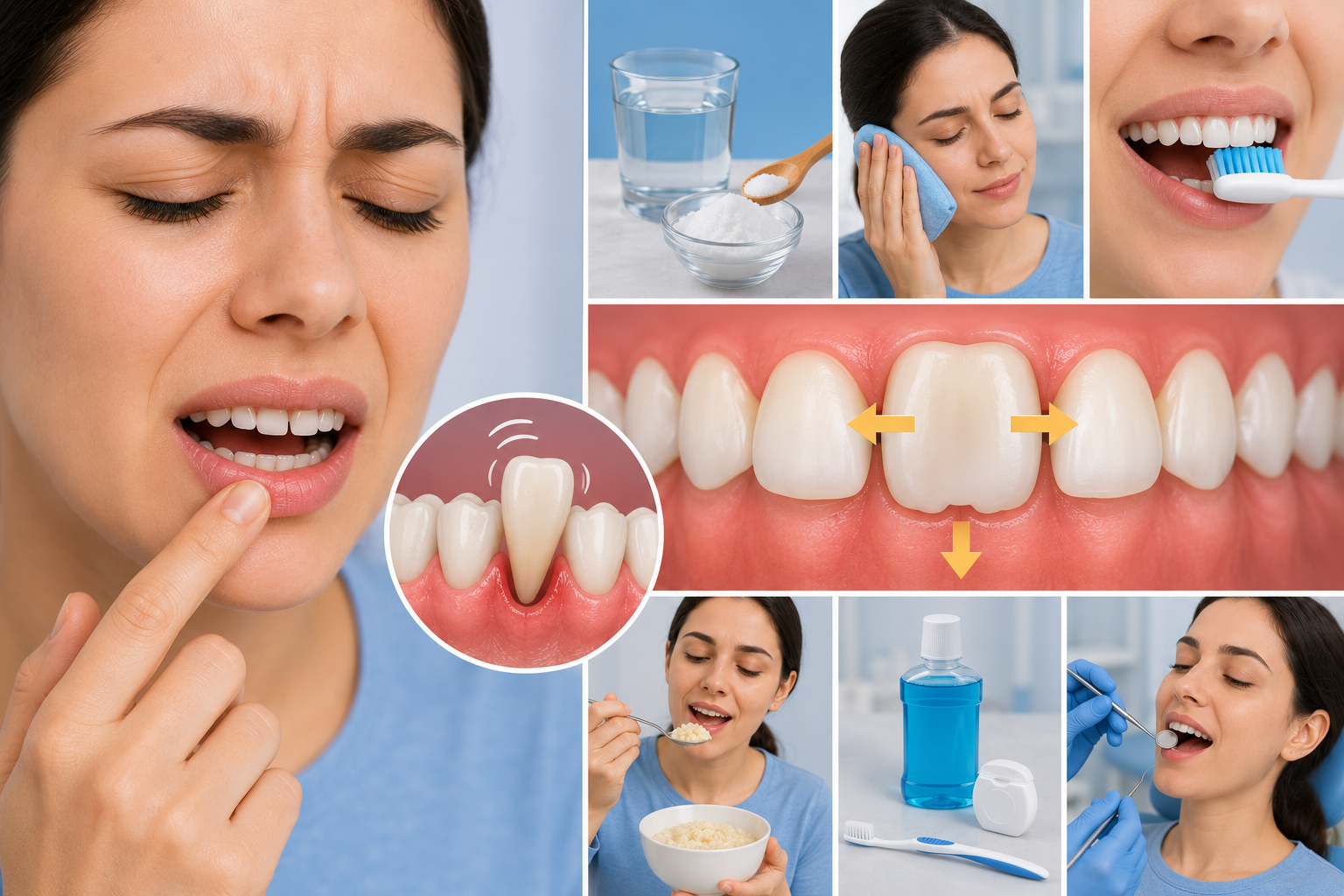
How to Fix a Loose Tooth Safely at Home
While a dentist should confirm the cause, there are safe steps you can take right away to protect the tooth and reduce further stress on it.
- Stop touching or wiggling it. Constantly checking a loose tooth with your tongue or fingers can worsen ligament irritation.
- Switch to a soft-food diet. Avoid hard, crunchy, or chewy foods on that side of your mouth until you’re evaluated.
- Rinse with warm salt water. A gentle saltwater rinse can reduce inflammation around the gum line without disturbing the tooth.
- Use a soft-bristled toothbrush. Brush gently around the area to avoid extra pressure on the loose tooth.
- Avoid smoking or tobacco. Tobacco use slows gum healing and worsens periodontal disease, one of the top causes of tooth mobility.
Hypothetical Example (for illustration purposes): Imagine someone notices a lower front tooth feels slightly loose after weeks of stress-related teeth grinding. They start using a soft toothbrush, cut back on hard foods, and see their dentist, who fits them with a nightguard. Over the following months, the tooth’s mobility gradually decreases as grinding pressure is reduced. Note: This scenario is illustrative. Actual results vary by cause, severity, and how quickly treatment begins.
These steps can protect the tooth while you wait for your appointment, but they don’t replace professional loose tooth treatment — especially if gum disease or trauma is the underlying cause.
Professional Treatment Options for a Loose Tooth
Once a dentist identifies the cause, treatment is matched to how loose the tooth is and why. Below is a comparison of the main options dentists use.
| Treatment | Best For | Typical Approach | What to Expect |
| Deep cleaning (scaling & root planing) | Early-to-moderate gum disease | Removes plaque and tartar below the gumline | May need 1–2 visits; mild soreness afterward |
| Dental splinting | Trauma or moderate mobility | Bonds the loose tooth to neighboring teeth for support | Splint often stays in place for weeks to months |
| Bite adjustment / nightguard | Grinding-related looseness | Reshapes bite contact or protects teeth at night | Ongoing use for grinding-related cases |
| Periodontal surgery | Advanced gum disease with bone loss | Repairs or regenerates supporting tissue and bone | Longer recovery; done by a periodontist |
| Extraction and replacement | Severe mobility with irreversible bone loss | Removes the tooth; replaced with implant, bridge, or denture | Reserved for teeth that can’t be stabilized |
The National Institute of Dental and Craniofacial Research explains that periodontal disease is an infection of the tissues that hold teeth in place, and that without treatment, the bone supporting the teeth can be destroyed. This is why treatment for a loose tooth tends to focus on stopping the underlying disease process, not just stabilizing the tooth itself.
How to Choose the Right Treatment for Your Loose Tooth
The right fix depends on three factors your dentist will assess:
1. The Underlying Cause
Gum disease, trauma, and grinding each call for different treatment paths — treating the wrong cause won’t stabilize the tooth long-term.
2. How Loose the Tooth Is
Dentists often grade mobility on a simple scale, from barely detectable movement to a tooth that can be moved vertically. Higher-grade mobility usually needs more intensive treatment, like splinting or surgery.
3. Bone and Gum Health
X-rays showing bone loss around the tooth change the treatment plan significantly compared to a tooth with healthy bone but soft-tissue inflammation.
Pro Tip: Ask your dentist to show you your mobility grade and any bone loss on X-rays. Understanding your specific situation helps you make sense of why one treatment is recommended over another.
How to Prevent a Loose Tooth From Getting Worse
Whether or not you need active treatment now, these habits reduce the risk of a loose tooth progressing:
- Keep up consistent oral hygiene — brushing twice daily and flossing helps prevent the gum disease that causes most adult tooth mobility.
- Treat grinding early — a nightguard can prevent years of excess force on your teeth and their supporting structures.
- Get regular dental checkups — early gum disease is often reversible; advanced bone loss usually isn’t.
- Wear a mouthguard during contact sports — this is the simplest way to prevent trauma-related tooth mobility.
- Address dry mouth or medication side effects — some medications reduce saliva, raising gum disease risk over time.
The American Academy of Periodontology notes that gum disease often develops without pain, which is why regular dental visits matter even when a loose tooth isn’t a current concern.
FAQ
Q: Can a loose tooth tighten back up on its own?
Mild looseness from grinding, a recent cleaning, or slight trauma can sometimes improve as inflammation settles. Looseness from gum disease won’t reverse without treatment.
Q: What deficiency causes loose teeth?
Low calcium or vitamin D can weaken bone density over time, indirectly affecting the jawbone that supports teeth. Gum disease remains the more common direct cause.
Q: Is it OK to wiggle a loose tooth?
No — frequently wiggling a loose adult tooth can further irritate the ligament and gum tissue holding it in place. Let a dentist assess it instead.
Q: How do dentists fix a loose tooth?
Treatment depends on the cause and ranges from deep cleaning and splinting to bite adjustment or periodontal surgery. Severely loose teeth with major bone loss may require extraction.
Q: Can a loose adult tooth be saved?
Many can, especially when treated early. Splinting and gum treatment successfully stabilize teeth in a large share of cases caught before advanced bone loss.
Q: What happens if you don’t treat a loose tooth?
Untreated mobility from gum disease typically worsens, increasing the risk of losing the tooth and the bone around it. Trauma-related looseness can also worsen without stabilization.
Q: How long does it take for a loose tooth to feel normal again?
Mild cases may improve within a few weeks of treatment. More significant mobility, especially from gum disease, can take months of periodontal care to stabilize.
Q: How much does treatment for a loose tooth cost?
Costs vary widely by treatment type and location — a deep cleaning is far less expensive than periodontal surgery or an implant. Your dentist can provide an estimate after diagnosis.
Final Thoughts
A loose tooth is your body’s signal that something needs attention, whether it’s gum disease, grinding, or a recent injury. The safest path is simple: protect the tooth with gentle care at home, and get a professional diagnosis before the underlying cause has a chance to progress. Catching it early is almost always easier and less costly than waiting.
RELATED POSTS
PRP for Under Eyes: Benefits, Procedure, Recovery, Cost, Results, and Side Effects
Does Gatorade Cause Kidney Stones? What the Research Actually Shows
Spider Veins on Stomach: Causes, Risk Factors, and Treatment Options
Can an Ear Infection Cause Jaw Pain? Causes, Symptoms & Relief
Detego Health Provider Portal: Complete Guide for Healthcare Providers