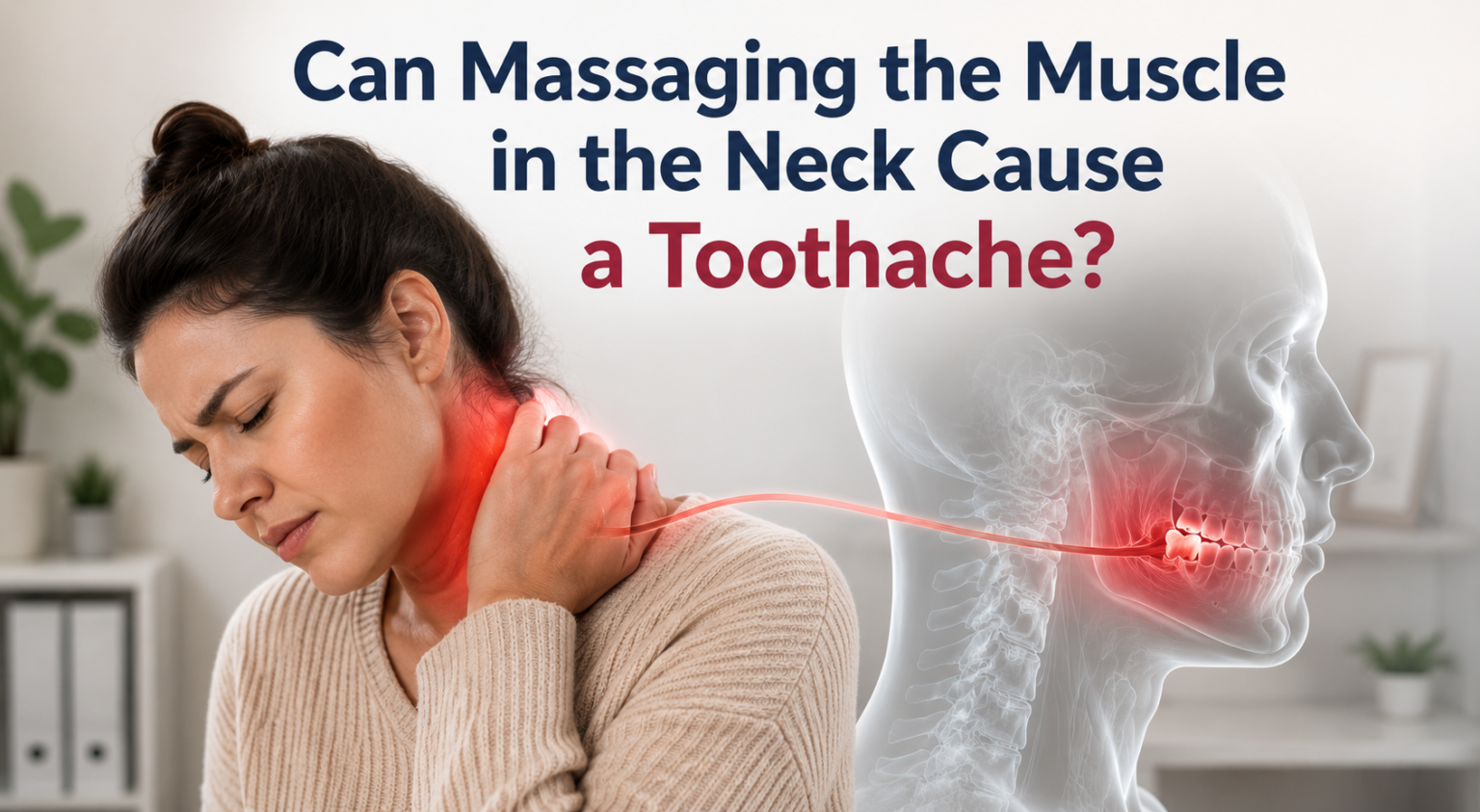
Yes, massaging the muscles in your neck can sometimes cause a toothache, even though your teeth are completely healthy. This happens because muscles like the sternocleidomastoid and upper trapezius share nerve pathways with your jaw and face through the trigeminal nerve and cervical nerve network.
When these muscles are massaged, pressed, or strained, they can create what is known as referred pain, meaning discomfort felt in one area actually originates from another. The jaw, teeth, and neck are closely linked through overlapping nerve signals, so tension in the neck can easily be mistaken for a dental problem.
In most cases, this type of tooth pain fades once the muscle tension is released. However, if the pain is severe, persistent, or paired with swelling, it is important to rule out an actual dental issue.
Why Neck Massage Can Trigger Tooth Pain?
The connection between your neck muscles and your teeth may seem unusual at first, but it comes down to shared nerve pathways in the head and neck. Below, we explain the specific nerves and muscles responsible for this overlap.
The Trigeminal Nerve Connection
The trigeminal nerve is the main nerve responsible for sensation in your face, jaw, and teeth, and it also has connections to the upper cervical nerves in your neck. Because of this shared wiring, irritation or tension in neck muscles can send confusing signals to the brain, which may interpret them as tooth or jaw pain.
This overlap is sometimes called the Hyperacusis, and it explains why neck-related issues so often show up as facial or dental discomfort. Understanding this connection is the first step in recognizing that not all tooth pain originates in the tooth itself.
Referred Pain from Trigger Points
Trigger points are small, tight knots that form within a muscle and can send pain to areas far from their actual location. When trigger points develop in the sternocleidomastoid, trapezius, or even the masseter muscle near the jaw, they can radiate pain directly into the teeth or gums.
Massaging these trigger points, especially with too much pressure, can temporarily intensify this referred sensation before it improves. This is a well-documented pattern in myofascial pain research and is one of the most common explanations for unexplained tooth pain with no dental cause.
Muscles Most Commonly Involved
Several neck and jaw muscles are known to refer pain toward the teeth when they become tight or irritated. Identifying which muscle is involved can help you target relief more effectively. The table below summarizes the muscles most often linked to this type of referred tooth pain.
| Muscle | Location | Common Referred Pain Area |
| Sternocleidomastoid (SCM) | Side of the neck, from behind the ear to the collarbone | Jaw, ear, and back teeth |
| Upper Trapezius | Back of neck and shoulders | Jaw, temple, and side of face |
| Masseter | Jaw muscle used for chewing | Upper and lower teeth |
| Temporalis | Side of the head, above the ear | Upper teeth and temple |
Symptoms That Suggest Referred Pain (Not a Dental Problem)
Not every toothache after a neck massage means something is wrong with your teeth. This section explains the signs that point toward a muscular cause and how to spot when a dental issue may also be present.
Signs It’s Muscular, Not Dental
If your tooth pain appears or worsens specifically after neck movement, massage, or pressure on certain muscles, it is more likely to be muscular in origin. This type of pain usually does not react to hot or cold foods the way a true dental problem would, and there is often no visible sign of decay, swelling, or infection.
The discomfort may also shift slightly in location or intensity depending on your posture or how tense your neck muscles are that day. Recognizing these patterns can help you avoid unnecessary worry about your dental health.
When Pain Overlaps with Real Dental Issues
It is possible for muscular tension and an actual dental problem to occur at the same time, which can make diagnosis more confusing. If you already have a cavity, gum disease, or a cracked tooth, added neck tension may worsen how the pain feels or make it seem more widespread.
In these cases, the pain often does not fully resolve even after the neck muscles relax, which is a strong signal that a dental evaluation is needed. Paying attention to whether the pain fully disappears after neck relief can help you tell the two apart.
Common Causes of Neck Tension Linked to Jaw and Tooth Pain
Certain everyday habits and conditions make neck tension, and the resulting tooth pain, much more likely. Understanding these causes can help you address the root of the problem rather than just the symptoms.
Poor Posture and Tech Neck
Spending long hours looking down at phones, laptops, or desks puts continuous strain on the neck and shoulder muscles. Over time, this posture shortens and tightens muscles like the trapezius and SCM, making them more prone to developing trigger points.
As these muscles stay chronically tense, the likelihood of referred pain reaching the jaw and teeth increases significantly. Correcting posture is often one of the simplest ways to reduce this type of discomfort long term.
TMJ Disorder and Bruxism
Temporomandibular joint (TMJ) disorders and teeth grinding, known as bruxism, place extra strain on both the jaw and neck muscles. Because the jaw and neck muscles work closely together during chewing and speaking, dysfunction in one area frequently affects the other.
People with TMJ issues often notice that neck tension and tooth-related pain occur together, especially after stress or clenching episodes. Addressing TMJ symptoms directly can significantly reduce related neck and tooth discomfort.
Stress and Muscle Clenching
Emotional stress commonly leads to unconscious muscle clenching in the jaw, neck, and shoulders, even without a person realizing it. This constant low-level tension can build into trigger points over time, making the muscles more sensitive to touch and more likely to refer to pain toward the teeth.
Stress-related clenching is especially common during periods of high workload, poor sleep, or anxiety. Managing stress through relaxation techniques can indirectly reduce the frequency of referred tooth pain.
How to Relieve Neck-Related Tooth Pain?
Once you understand that neck tension may be behind your tooth pain, there are several practical ways to find relief. This section covers self-care methods, precautions, and when to seek professional help.
Self-Care Techniques
Gentle stretching, warm compresses, and light massage can help release tight neck muscles without overstimulating trigger points. Applying a warm towel to the affected area for ten to fifteen minutes can relax the muscle fibers and reduce referred pain over time. Slow, controlled neck stretches, done a few times a day, can also prevent tension from building up again. The table below outlines a few simple techniques and what to keep in mind while using them.
| Technique | How It Helps | Precautions |
| Warm compress | Relaxes tight muscle fibers and improves blood flow | Avoid excessive heat directly on skin |
| Gentle neck stretches | Reduces overall muscle tension | Stop if pain sharply increases |
| Light self-massage | Eases minor trigger points | Avoid deep pressure on sensitive areas |
| Posture correction | Prevents tension from returning | Requires consistency over time |
When Massage Might Worsen Symptoms
While gentle massage can help, overly aggressive pressure on trigger points can sometimes intensify referred pain rather than relieve it. This is especially true if there is underlying inflammation or if the muscle is massaged too deeply without proper technique.
If tooth pain becomes noticeably worse during or immediately after a massage, it is best to stop and allow the area to rest. Listening to your body’s response is key to avoiding unnecessary flare-ups.
Professional Treatment Options
If self-care does not provide lasting relief, a physical therapist trained in myofascial release can target trigger points more precisely and safely. A dental evaluation is also important to rule out any actual tooth-related cause, especially if pain persists.
For those with suspected TMJ involvement, a TMJ specialist or dentist experienced in jaw disorders can offer targeted treatment options. Combining professional care with consistent self-care often produces the best long-term results.
When to See a Doctor or Dentist
While most neck-related tooth pain is harmless and temporary, certain symptoms should never be ignored. Below are the warning signs that call for prompt medical or dental attention.
Red Flags That Need Immediate Attention
Persistent one-sided pain, visible swelling, fever, or pain that worsens despite rest and self-care are all signs that something more serious may be happening. These symptoms could indicate an infection, abscess, or another condition that needs professional treatment rather than home remedies.
Waiting too long to address these red flags can allow underlying issues to worsen. If you experience any of these signs, it is best to schedule an evaluation with a dentist or doctor as soon as possible.
Frequently Asked Questions
Can neck pain cause a toothache on only one side?
Yes, referred pain often follows the same side as the affected muscle, so one-sided neck tension can lead to one-sided tooth pain.
Can a chiropractor help with tooth pain caused by neck tension?
A chiropractor may help by addressing muscle and alignment issues in the neck, which can reduce referred pain over time.
How long does referred tooth pain from neck tension usually last?
It often resolves within a few hours to a few days once the underlying muscle tension is relieved, though chronic cases may take longer.
Should I see a dentist or a doctor first?
If there is no visible dental issue and the pain seems linked to neck movement, starting with a doctor or physical therapist is reasonable, but a dental check is still recommended to rule out oral causes.
Conclusion
Massaging the muscles in the neck can indeed cause a toothache due to referred pain traveling through shared nerve pathways between the neck, jaw, and teeth.
While this is usually harmless and improves with rest, gentle stretching, and proper posture, persistent or severe symptoms should always be evaluated by a professional.
Understanding the connection between neck tension and dental discomfort can help you respond calmly and take the right steps toward relief.
RELATED POSTS
Does Cramping During Ovulation Mean Pregnancy? Full Guide
Are Blue Eyes More Sensitive to Light? Science-Backed Guide
Do Humidifiers Help with Asthma? What You Need to Know Before Buying One
Does Pregnancy Cause Loose Stools? Causes, Trimesters
Do Expired Pregnancy Tests Work? Accuracy, Risks, What to Do