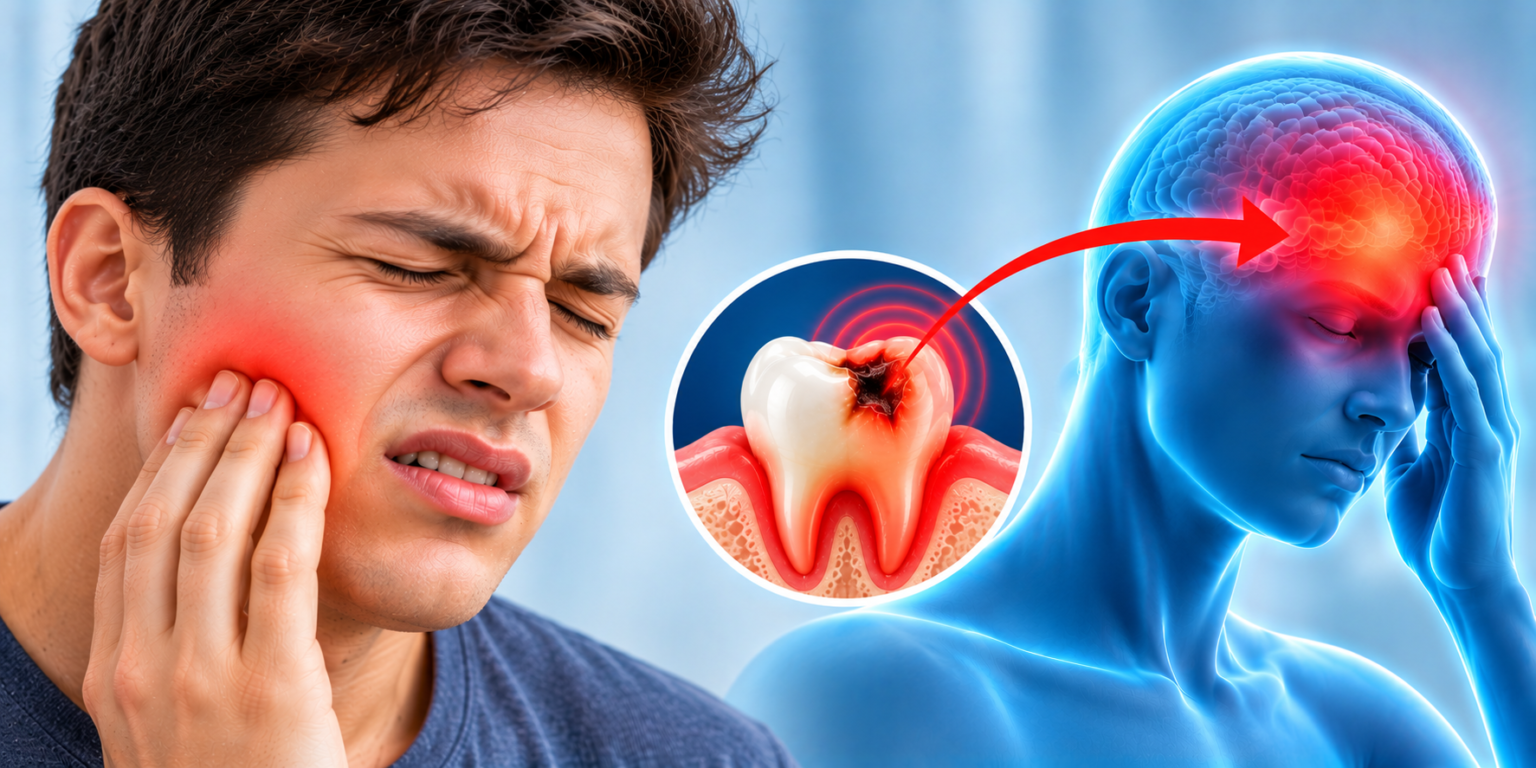
Yes, a toothache can cause a headache, and this connection is far more common than most people realize. Your teeth, jaw, and head share overlapping nerve pathways, so pain that starts in a decayed or infected tooth can easily travel upward and settle in your temples, forehead, or even behind your eyes.
This happens because the trigeminal nerve, which controls sensation in your face and jaw, also branches into areas responsible for head pain. Understanding this link helps you treat the real problem instead of just masking the symptoms with painkillers.
Understanding the Connection Between Teeth and Head Pain
The link between dental pain and headaches comes down to shared nerve networks in your face and skull. Once you understand how these nerves overlap, it becomes much easier to spot the subsections below explaining the exact mechanism.
The Role of the Trigeminal Nerve
The trigeminal nerve is the largest cranial nerve and it supplies sensation to your teeth, jaw, cheeks, and forehead. When a tooth becomes inflamed or infected, this nerve carries the pain signal, but the brain sometimes struggles to pinpoint the exact origin. As a result, discomfort that truly starts in the mouth can feel like it is coming from the head itself.
How Nerve Pathways Overlap Between Teeth, Jaw, and Head?
Several nerve branches from the teeth and jaw converge near pathways that also serve the scalp and temples. Because these routes are so closely packed together, a signal from a damaged tooth can spill over into nearby nerve fibers. This overlapping wiring is a major reason dental problems so often show up as head pain rather than staying isolated in the mouth.
Why Can Pain Travel?(Referred Pain Explained Simply)
Referred pain happens when your brain misreads the source of a signal because two areas share the same nerve highway. Think of it like a wrong-number call reaching the wrong house because the wires got crossed somewhere along the line. This is exactly why a bad molar can leave you rubbing your temple instead of your jaw.
Common Dental Causes of Headaches
Many everyday dental issues can quietly trigger head pain without you realizing the two are related. Below, each specific cause is broken down so you can identify which one might match your situation.
Tooth Decay and Cavities
A cavity exposes the sensitive inner layers of a tooth to bacteria, temperature changes, and pressure. As decay progresses closer to the nerve, the resulting inflammation can radiate outward and produce a dull, persistent headache. Left untreated, this pain typically worsens rather than fading on its own.
Tooth Infection or Abscess
An abscessed tooth involves a pocket of infection that puts pressure on surrounding nerves and tissue. This pressure frequently triggers throbbing pain that extends into the jaw, ear, and head. Because an abscess can spread if ignored, this cause deserves prompt dental attention.
Impacted Wisdom Teeth
When wisdom teeth don’t have enough room to emerge properly, they push against neighboring teeth, gums, and bone. This constant pressure often produces jaw stiffness alongside tension-type headaches that build gradually across the day. Many people notice the headache worsens with chewing or jaw movement.
Cracked or Broken Tooth
A cracked tooth exposes nerve endings every time you bite down, chew, or drink something hot or cold. The sharp, sudden pain that follows can trigger a reflexive tightening of nearby muscles, which then contributes to head pain. This cause is sometimes tricky to detect since the crack may not be visible without an exam.
Teeth Grinding (Bruxism)
Grinding or clenching your teeth, often during sleep, places enormous strain on the jaw muscles and joints. Over time, this repeated tension travels upward into the temples and scalp, producing headaches that are often worst in the morning. Bruxism is one of the most frequent hidden causes behind unexplained tension headaches.
TMJ (Jaw Joint) Disorders
The temporomandibular joint connects your jawbone to your skull, and when it becomes inflamed or misaligned, pain can spread widely. TMJ disorders commonly cause clicking sounds, jaw stiffness, and headaches concentrated near the temples. Stress and teeth grinding often make TMJ-related headaches noticeably worse.
Misaligned Bite (Malocclusion)
When your upper and lower teeth don’t fit together properly, your jaw muscles have to work harder with every bite. This extra strain builds tension over time and frequently results in recurring headaches, especially after meals. Correcting the bite alignment often resolves these headaches at the source.
Types of Headaches Linked to Tooth Pain
Not every headache caused by dental problems feels the same, and recognizing the type can help guide treatment. The subsections that follow explain how each headache type typically presents.
Tension Headaches
Tension headaches from dental issues usually feel like a tight band squeezing around the head, often paired with jaw soreness. They tend to build gradually rather than striking suddenly. This type is the most commonly reported headache connected to tooth and jaw problems.
Migraine-Like Headaches
Some people experience throbbing, one-sided pain that closely resembles a migraine when a dental problem is present. Sensitivity to light or nausea can sometimes accompany these episodes. Because the symptoms overlap so closely with true migraines, dental causes are frequently overlooked.
Sinus-Related Headaches (and How Dental Issues Mimic Sinus Pain)
Upper back teeth sit very close to the sinus cavities, so an infected upper molar can create pressure that feels identical to a sinus headache. Symptoms often include facial pressure, especially around the cheeks and forehead. A dental exam is sometimes needed to rule out a tooth as the true source before treating it as a sinus issue.
Cluster Headache Overlap (Rare Cases)
In rare situations, severe dental pain has been reported alongside cluster headache patterns, which involve intense pain around one eye. This overlap is uncommon but worth mentioning for people with unusually severe, one-sided symptoms. Anyone experiencing this pattern should seek prompt medical and dental evaluation together.
How to Tell If Your Headache Is Tooth-Related?
Figuring out whether your headache traces back to a dental issue involves watching for specific patterns and triggers. The table below summarizes the clearest signs to look for.
| Sign | What to Notice |
| Pain location | Concentrated near the jaw, temple, or one side of the face |
| Trigger pattern | Worsens when chewing, biting, or touching a specific tooth |
| Timing | Headache and tooth pain often appear together or one shortly after the other |
| Sensitivity | Discomfort increases with hot, cold, or sweet foods |
| Morning symptoms | Jaw soreness or headache upon waking, suggesting nighttime grinding |
If several of these signs apply to you, there’s a strong chance your headache and toothache share the same root cause rather than being two unrelated problems happening at once.
Why Does This Happen? The Science Made Simple
The connection between dental pain and headaches isn’t mysterious once you break down the underlying biology. This section explains the three main mechanisms driving the pain in plain, everyday language.
Nerve Signal Confusion (Referred Pain Explained With an Analogy)
Imagine your nervous system as a bundle of wires running through a narrow tunnel toward your brain. When one wire near a damaged tooth gets irritated, the electrical noise can bleed into neighboring wires headed to the scalp. Your brain then registers pain in the head even though the actual damage is happening in the mouth.
Muscle Tension From Jaw Clenching
Pain, whether from a cavity or an infection, often triggers an automatic clenching reflex in the jaw muscles. These muscles connect directly to the temples and sides of the skull, so sustained clenching creates real, physical tension headaches. The longer the underlying tooth problem goes untreated, the more this muscle tension tends to build.
Inflammation Spreading to Nearby Areas
Infections and inflamed tissue release chemical signals that don’t stay perfectly contained to one spot. These inflammatory signals can affect nearby nerves and blood vessels, contributing to the throbbing sensation many people describe. This is part of why dental headaches often feel diffuse rather than sharply localized.
When to See a Doctor or Dentist
Knowing when a toothache-related headache requires urgent care can prevent a minor issue from becoming a serious one. The subsections below outline the specific warning signs and what a dental visit typically involves.
Warning Signs of Infection
Fever, facial swelling, and pain that keeps intensifying rather than improving are all signs of a possible infection spreading beyond the tooth. Swelling near the jaw or difficulty swallowing should never be ignored. These symptoms indicate the infection may be affecting deeper tissues.
When It’s an Emergency
Severe swelling that affects breathing or swallowing, along with a high fever, calls for emergency care rather than a routine dental appointment. Rapidly worsening pain over just a few hours also fits this category. Waiting too long in these situations can allow the infection to spread further.
What Tests or Exams to Expect
A dentist will typically start with a visual exam, gentle tapping on the affected tooth, and often an X-ray to check for decay, abscesses, or bone involvement. In some cases, they may also check your bite alignment or jaw movement if TMJ is suspected. These exams help pinpoint whether the tooth truly is the headache’s source.
Home Remedies for Temporary Relief
While a dental visit is essential for a lasting fix, certain home approaches can ease discomfort in the meantime. The list below covers the most commonly recommended options.
- Over-the-counter pain relievers such as ibuprofen or acetaminophen, taken as directed on the label
- A cold compress applied to the outside of the jaw to reduce swelling and numb pain
- A warm compress instead, if muscle tension rather than swelling seems to be the main issue
- A warm saltwater rinse to soothe irritated gum tissue around the affected tooth
- Avoiding hard, cold, or very hot foods that might aggravate the sensitive area
- Simple relaxation techniques, like slow breathing or gently stretching the jaw, to release built-up tension
These remedies are meant to manage symptoms temporarily, not replace an actual dental evaluation.
Long-Term Treatment Options
Lasting relief usually depends on treating the dental problem directly rather than continuously managing the headache symptom. Each option below targets a different underlying cause.
Dental Treatments (Fillings, Root Canal, Extraction)
Cavities are typically resolved with a filling, while deeper infections often require a root canal to remove damaged tissue inside the tooth. In more severe cases, extraction may be the only option left. Once the dental issue is properly treated, the associated headaches frequently disappear within days.
Night Guards for Teeth Grinding
A custom-fitted night guard cushions the teeth and reduces the strain placed on jaw muscles during sleep. Many people notice a significant drop in morning headaches after consistent use. This is one of the simplest, most effective long-term solutions for bruxism-related pain.
TMJ Therapy
Treatment for TMJ disorders can include physical therapy, specialized mouth guards, or in some cases, dental adjustments to correct the bite. The goal is to reduce joint strain and restore normal jaw movement. Most patients experience noticeable headache relief once the joint stabilizes.
Orthodontic Correction
When a misaligned bite is the underlying cause, braces or other orthodontic treatment can gradually shift the teeth into proper alignment. This reduces the excess strain placed on jaw muscles with every bite. Though it takes longer than other treatments, the results tend to be permanent.
Prevention Tips
Preventing dental headaches largely comes down to consistent oral care and catching problems early. The following habits make the biggest difference over time.
- Schedule regular dental checkups every six months to catch cavities and infections early
- Maintain thorough oral hygiene, including brushing twice daily and flossing consistently
- Manage stress levels, since stress is a leading contributor to teeth grinding and clenching
- Treat cavities and minor dental issues promptly, before they progress into infections
- Consider a night guard early if you notice signs of grinding, rather than waiting for pain to develop
Frequently Asked Questions
Can a tooth infection cause a headache and fever? Yes, a spreading tooth infection can trigger both a headache and fever as your body fights the infection, and this combination should be treated as a priority.
Can wisdom teeth cause headaches? Impacted wisdom teeth frequently cause jaw pressure that radiates into tension-type headaches, especially as the teeth continue pushing against neighboring structures.
How long does a tooth-related headache last? Duration varies, but these headaches typically persist until the underlying dental issue is treated, ranging from a few hours to several days if ignored.
Can a headache from tooth pain go away on its own? Mild cases may temporarily ease with rest or pain relievers, but if the root dental problem remains untreated, the headache usually returns.
Conclusion
So, can a toothache cause a headache? The evidence clearly says yes, thanks to shared nerve pathways, muscle tension, and inflammation that connect your mouth and head more closely than most people expect.
Paying attention to the patterns described above can help you identify whether your headache has a dental root cause. If symptoms persist, seeing a dentist promptly is the most reliable way to find lasting relief.
Related Article’s
Can I Drink Alcohol 24 Hours After Tooth Extraction?
Does Tanning Help Acne? What Dermatologists Really Say
Does Cramping During Ovulation Mean Pregnancy? Full Guide
How Much Is SRT Therapy for Skin Cancer? Prices, Insurance & What to Expect